

| Plant Type | Shrubs |
| Sun Exposure | Full Sun (6+ Hrs), Part Sun / Shade (3-6 Hrs) |
| Moisture | Dry, Medium |
| Bloom Months | May, June, July |
| Moisture Needs | Normal |
| Season of Interest | Spring (Mar-May), Summer (Jun-Aug) |
| Shrub Height | Over 6' |
| Shrub Spread | Over 6' |
| Ecological Significance | Native Bee Friendly, Butterfly Friendly, Bird Friendly, Hummingbird Friendly |
Description
American Elderberry is a fast-growing, multi-stemmed native shrub celebrated for its abundant clusters of creamy white flowers and rich, dark purple fruit. In early to mid-summer, the large, flat-topped flower clusters bloom profusely, attracting pollinators and brightening meadows, woodland edges, and wetland margins. By late summer, the blossoms give way to heavy clusters of small, glossy berries that ripen to deep purple-black and are prized by birds and foraged for jellies, wines, and syrups. The compound, bright green leaves create a lush, full appearance through summer, while the shrub’s dense growth provides structure and cover in natural landscapes. Tough, adaptable, and highly productive, Elderberry is both ornamental and ecologically indispensable.
Ecological Value
Sambucus canadensis is a pollinator and wildlife powerhouse, providing nectar and pollen for native bees, butterflies, and flies, followed by fruit for more than 40 bird species, including robins, cedar waxwings, and catbirds. Small mammals and other wildlife also feed on the berries. Its dense growth habit offers nesting habitat and shelter for birds, while its roots stabilize soil along streambanks and wet meadows. Elderberry serves as a host plant for the Cecropia Moth, North America’s largest native moth, and several other Lepidoptera species. Its long bloom period and heavy fruit production make it a cornerstone species for supporting pollinators and birds alike.
Ideal Growing Conditions
Elderberry thrives in full sun to partial shade and medium to wet, well-drained soils, naturally occurring in floodplains, wet meadows, and woodland edges. It prefers rich, loamy or silty soils with consistent moisture but adapts well to a variety of conditions, including average garden soils. Once established, it spreads by suckers to form large colonies, making it ideal for naturalized plantings and restoration projects. While it tolerates short dry periods, regular moisture produces the best flowering and fruiting.
Landscape Uses
Ideal for rain gardens, wet meadows, woodland edges, and wildlife plantings, American Elderberry provides beauty, habitat, and seasonal abundance. It pairs beautifully with Buttonbush, Blue Vervain, and Joe Pye Weed for a lush, pollinator-rich composition. Its showy flowers, abundant berries, and dense foliage deliver multi-season interest while supporting a diverse array of wildlife. Hardy, fast-growing, and ecologically vital, Elderberry is one of the most rewarding native shrubs for both habitat restoration and home landscapes focused on biodiversity and sustainability.

American Elderberry Native Range
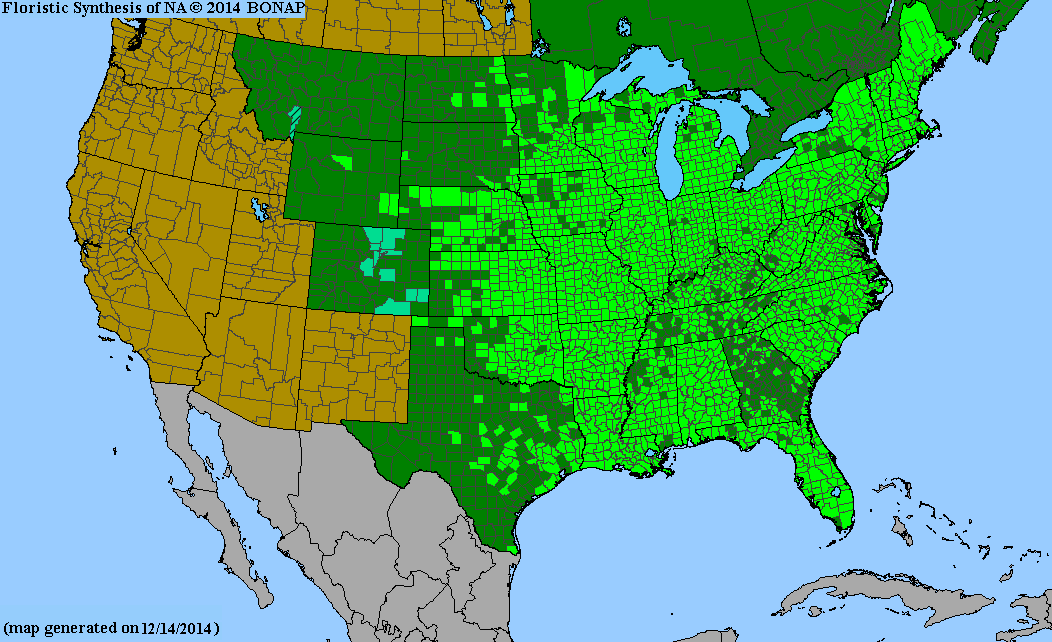
Map Color Key
| Species present in state and native | Species present and not rare | ||
| Species not present in state | Species present and rare |
Kartesz, J.T., The Biota of North America Program (BONAP). 2015. North American Plant Atlas. (http://bonap.net/napa). Chapel Hill, N.C. [maps generated from Kartesz, J.T. 2015. Floristic Synthesis of North America, Version 1.0. Biota of North America Program (BONAP). (in press)].