

| Plant Type | Shrubs |
| Sun Exposure | Full Sun (6+ Hrs), Part Sun / Shade (3-6 Hrs) |
| Moisture | Dry, Medium |
| Bloom Months | May, June, July |
| Moisture Needs | Normal |
| Season of Interest | Spring (Mar-May), Summer (Jun-Aug) |
| Shrub Height | Over 6' |
| Shrub Spread | Over 6' |
| Ecological Significance | Native Bee Friendly, Butterfly Friendly, Bird Friendly, Winter Bird Feed |
Description
Arrowwood Viburnum is a versatile, hardy native shrub admired for its dense, rounded form and seasonal interest. In late spring, it produces showy clusters of creamy white flowers that attract a flurry of pollinators. The dark green, serrated leaves provide lush summer foliage that transitions to deep shades of red and purple in fall. By late summer to early autumn, the flowers give way to glossy blue-black berries that ripen in striking contrast to the foliage. Tough, adaptable, and naturally graceful, Arrowwood Viburnum thrives in a wide range of conditions, offering year-round structure and habitat value.
Ecological Value
Viburnum dentatum is one of the most ecologically valuable native shrubs for wildlife. Its flowers provide nectar and pollen for native bees, butterflies, and flies, while its berries are a vital food source for over 35 bird species, including robins, cedar waxwings, and thrushes. It also serves as a host plant for the Spring Azure butterfly and several moth species, such as the Hummingbird Clearwing and the spectacular Baltimore Bomolocha. The dense branching provides shelter and nesting habitat for birds and small mammals, making it a cornerstone species in woodland edges and mixed native plantings.
Ideal Growing Conditions
Arrowwood Viburnum thrives in full sun to partial shade and medium to moist, well-drained soils. It naturally occurs along woodland edges, stream banks, and moist thickets but is also tolerant of dry upland soils once established. It prefers loamy or silty soils rich in organic matter but adapts to clay and sand. This shrub is exceptionally adaptable to varying moisture levels and light conditions, from open prairies to shaded understories. Plant more than one genetically distinct shrub nearby to ensure good fruit set, as cross-pollination is required for berry production.
Landscape Uses
Ideal for hedgerows, woodland edges, rain gardens, and wildlife plantings, Arrowwood Viburnum brings multi-season beauty and ecological strength to native landscapes. It pairs beautifully with Red Osier Dogwood, Winterberry, and Spicebush for a diverse and wildlife-rich composition. Its compact yet full form makes it suitable for screens, borders, and naturalized plantings. With its profusion of blooms, colorful fruit, and vibrant fall color, Arrowwood Viburnum provides continuous seasonal interest while supporting pollinators and birds year after year.
Arrowwood Viburnum Native Range
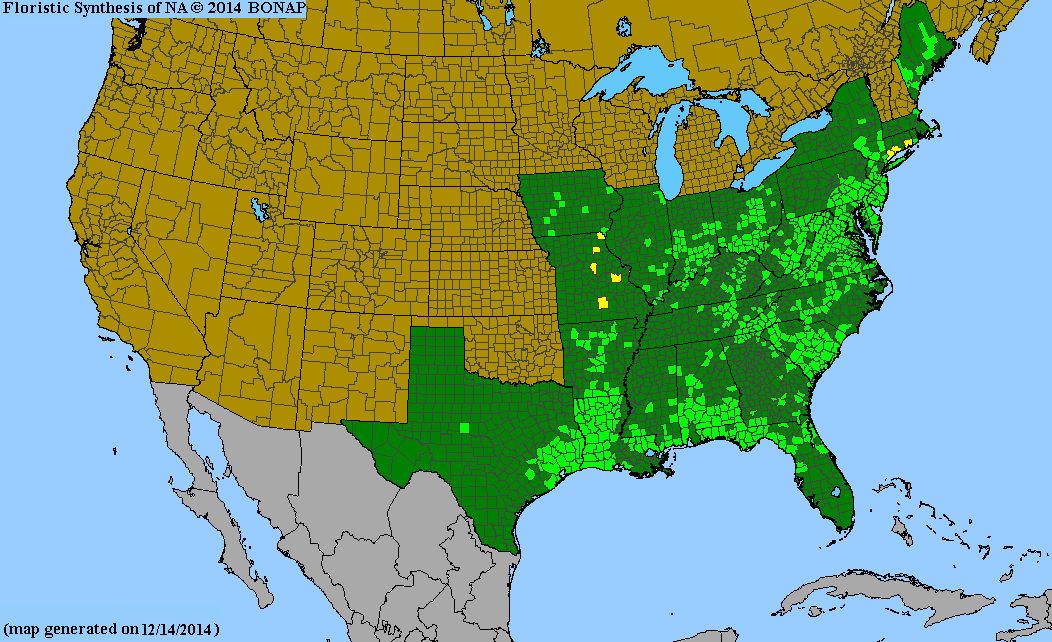
Map Color Key
| Species present in state and native | Species present and not rare | ||
| Species not present in state | Species present and rare |
Kartesz, J.T., The Biota of North America Program (BONAP). 2015. North American Plant Atlas. (http://bonap.net/napa). Chapel Hill, N.C. [maps generated from Kartesz, J.T. 2015. Floristic Synthesis of North America, Version 1.0. Biota of North America Program (BONAP). (in press)].