

| Plant Type | Flowering Perennials |
| Sun Exposure | Full Sun (6+ Hrs) |
| Height | Short (1-3') |
| Moisture | Dry, Medium |
| Bloom Months | May, June, July |
| Moisture Needs | Drought Tolerant, Flood Tolerant |
| Season of Interest | Summer (Jun-Aug), Fall (Sep-Nov) |
| Ecological Significance | Keystone, Native Bee Friendly, Butterfly Friendly, Bird Friendly, Hummingbird Friendly, Winter Bird Feed |
Description
Black-eyed Susan is one of the most iconic and cheerful native wildflowers, known for its bright golden-yellow petals surrounding a dark, domed center. Blooming over a long season from early to late summer, it brings warmth and vibrancy to meadows, gardens, and roadsides alike. Its upright, branching stems are topped with abundant daisy-like blooms that attract pollinators and provide a burst of color in both naturalized and formal settings. Although often grown as a biennial or short-lived perennial, it readily self-seeds, ensuring a continuous presence year after year.
Ecological Value
Rudbeckia hirta is a pollinator favorite, offering abundant nectar and pollen to native bees, butterflies, and beetles. It also serves as a host plant for the Silvery Checkerspot and Bordered Patch butterflies, providing food for their caterpillars. In late summer and fall, finches and other songbirds feed on the ripened seeds, extending its ecological benefits well beyond its bloom period. Its long flowering time and adaptability make it one of the most important species for supporting pollinators throughout the summer months.
Ideal Growing Conditions
Black-eyed Susan thrives in full sun and dry to medium, well-drained soils, adapting readily to poor, sandy, or clay conditions. It naturally occurs in prairies, open fields, and disturbed areas, where it tolerates heat and drought once established. While it prefers full sun, it can tolerate light shade with slightly reduced blooming. Removing spent flowers can prolong the bloom season, while allowing some seed heads to remain encourages natural reseeding and provides food for birds. This low-maintenance, fast-growing plant is easy to establish and ideal for beginners and seasoned gardeners alike.
Landscape Uses
Perfect for pollinator gardens, prairies, borders, and meadows, Black-eyed Susan adds bold color and a welcoming, natural look to any sunny landscape. It pairs beautifully with Purple Coneflower, Blazing Stars, and native grasses like Little Bluestem for a classic prairie combination. Its long-lasting blooms make excellent cut flowers, and its drought tolerance ensures reliable performance even in tough conditions. Hardy, adaptable, and ecologically valuable, Black-eyed Susan is a cornerstone species for creating vibrant, wildlife-friendly native plantings.
Black-eyed Susan Native Range
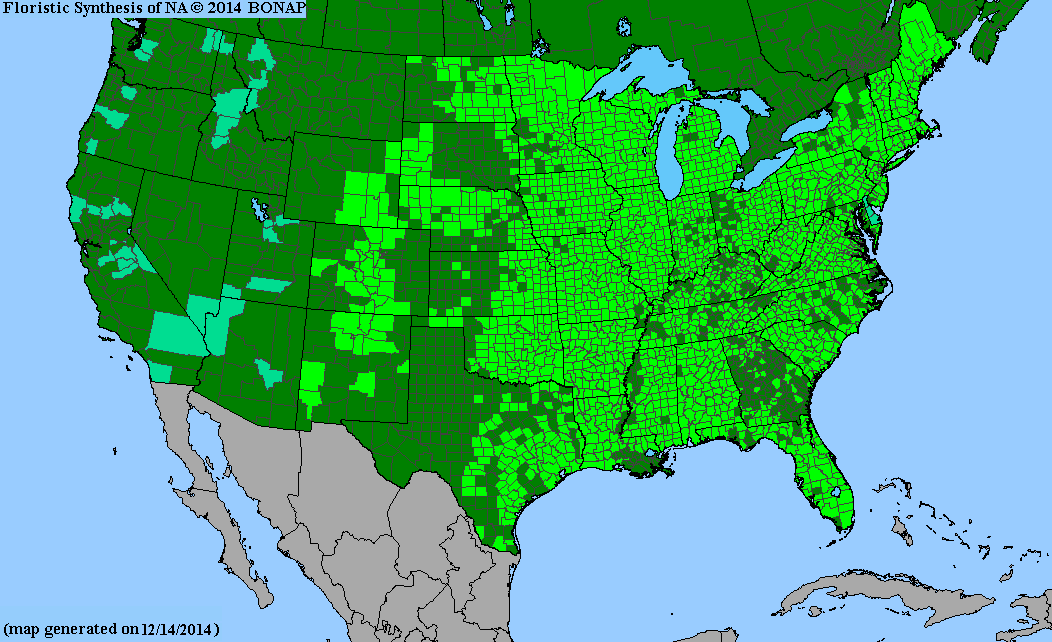
Map Color Key
| Species present in state and native | Species present and not rare | ||
| Species not present in state | Species present and rare |
Kartesz, J.T., The Biota of North America Program (BONAP). 2015. North American Plant Atlas. (http://bonap.net/napa). Chapel Hill, N.C. [maps generated from Kartesz, J.T. 2015. Floristic Synthesis of North America, Version 1.0. Biota of North America Program (BONAP). (in press)].