

| Plant Type | Flowering Perennials |
| Sun Exposure | Full Sun (6+ Hrs), Part Sun / Shade (3-6 Hrs) |
| Height | Medium (3-5') |
| Moisture | Dry, Medium |
| Bloom Months | May, June, July |
| Moisture Needs | Drought Tolerant |
| Season of Interest | Summer (Jun-Aug) |
| Ecological Significance | Keystone, Native Bee Friendly |
Description
Brown-eyed Susan is a profuse-blooming native wildflower that lights up gardens and meadows from midsummer well into fall. Its abundant, smaller daisy-like flowers feature bright golden petals surrounding dark chocolate-brown centers, covering the plant in color for weeks on end. The branching stems create a bushy, airy appearance, and the lower leaves are distinctly three-lobed—giving rise to its species name triloba. With its long bloom time, adaptability, and cheerful character, Brown-eyed Susan brings warmth and pollinator activity to any sunny garden.
Ecological Value
Rudbeckia triloba is a pollinator favorite, attracting a wide variety of bees, butterflies, and beetles throughout its extended bloom period. It is also a host plant for the Silvery Checkerspot butterfly and provides nectar for migrating Monarchs and other late-season pollinators. As the flowers fade, seed heads form and offer valuable food for finches and other seed-eating birds. Its dense, branching growth provides shelter for insects and small wildlife, making it both an ornamental and ecological asset to prairies and gardens.
Ideal Growing Conditions
Brown-eyed Susan thrives in full sun to light shade and medium to dry, well-drained soils, though it tolerates a wide range of soil types, including clay and sandy loam. It naturally occurs in prairies, woodland edges, and open fields. Once established, it is drought-tolerant and low-maintenance. The plant self-seeds readily under favorable conditions, ensuring its continued presence even though individual plants are short-lived. Deadheading can prolong flowering, while allowing some seed heads to remain supports wildlife and natural reseeding.
Landscape Uses
Ideal for pollinator gardens, borders, and prairie plantings, Brown-eyed Susan brings long-lasting color and movement to the landscape. It pairs beautifully with Purple Coneflower, Blazing Stars, and native grasses for a classic summer display. Its informal habit makes it a natural fit for cottage gardens or mass plantings where a splash of gold is desired. Durable, adaptable, and rich in ecological value, Brown-eyed Susan is a versatile native wildflower that bridges summer and fall with continuous color and life.
Brown-eyed Susan Native Range
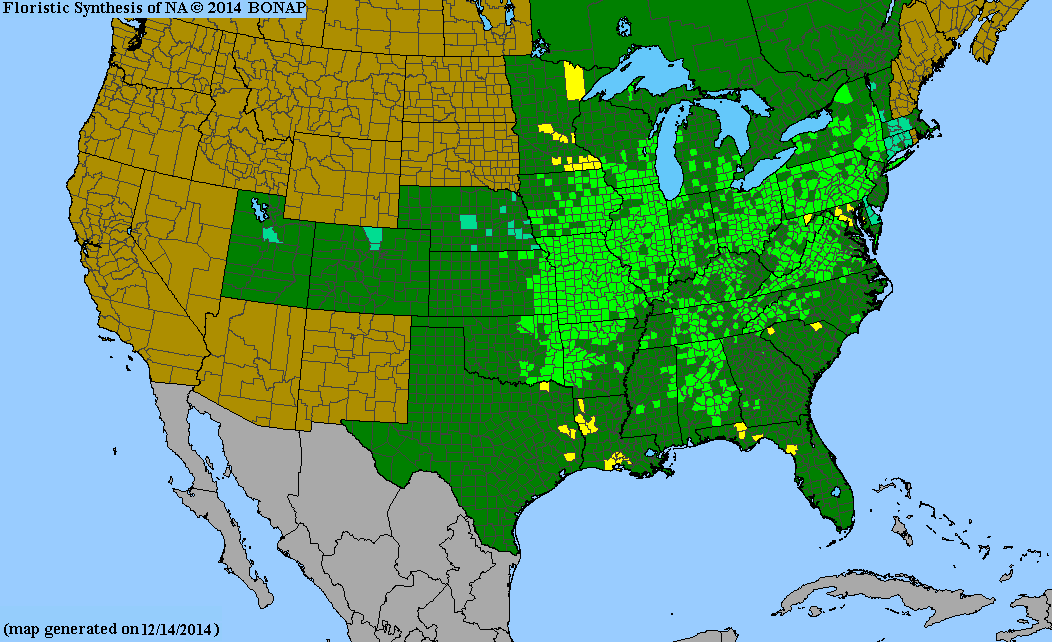
Map Color Key
| Species present in state and native | Species present and not rare | ||
| Species not present in state | Species present and rare |
Kartesz, J.T., The Biota of North America Program (BONAP). 2015. North American Plant Atlas. (http://bonap.net/napa). Chapel Hill, N.C. [maps generated from Kartesz, J.T. 2015. Floristic Synthesis of North America, Version 1.0. Biota of North America Program (BONAP). (in press)].