

| Sun Exposure | Full Sun (6+ Hrs), Part Sun / Shade (3-6 Hrs) |
| Height | Short (1-3') |
| Moisture | Dry, Medium |
| Bloom Months | May, June, July |
| Moisture Needs | Flood Tolerant |
| Season of Interest | Spring (Mar-May), Summer (Jun-Aug) |
Description
Fox Sedge is a robust, clump-forming native sedge commonly found in wet meadows, marshes, and along stream banks. Its bright green, arching leaves and dense, bottlebrush-like seed heads resemble a fox’s tail, giving the plant its name. Blooming in late spring to early summer, it provides graceful texture and structure to moist landscapes. The foliage remains attractive throughout the growing season, and the mature seed heads persist into fall, offering subtle visual interest. Adaptable and easy to grow, Fox Sedge is a dependable choice for adding natural texture and ecological value to wet or seasonally damp areas.
Ecological Value
Carex vulpinoidea is an important host and food source for a wide range of native wildlife. The dense tufts provide nesting and cover for birds and small mammals, while the seeds are eaten by waterfowl and songbirds. As a host plant, it supports the larvae of various butterfly and moth species, including several Skippers. Its fibrous root system helps stabilize soil and prevent erosion, making it valuable for riparian restoration and stormwater management. By filtering runoff and improving soil health, Fox Sedge contributes significantly to healthy wetland ecosystems.
Ideal Growing Conditions
Fox Sedge thrives in full sun to partial shade and moist to wet soils, performing best in loamy or clay soils that retain moisture. It naturally occurs in wetlands, swales, and floodplains but adapts to rain gardens and other landscape settings that experience periodic wetness. It tolerates standing water as well as brief dry periods once established. Minimal maintenance is required—simply cut back old foliage in late winter or early spring to allow fresh growth to emerge. It self-seeds modestly and forms tidy clumps without becoming invasive.
Landscape Uses
Ideal for rain gardens, wet meadows, pond edges, and bioswales, Fox Sedge adds fine texture and ecological function to native plantings. It pairs beautifully with Blue Flag Iris, Swamp Milkweed, and Joe Pye Weed for a natural wetland look. Its dense, arching foliage makes it effective for erosion control and habitat restoration projects. Durable, adaptable, and wildlife-friendly, Fox Sedge is an essential sedge for gardeners and restorationists seeking a reliable, attractive plant that supports both soil health and biodiversity.
Brown Fox Sedge Native Range
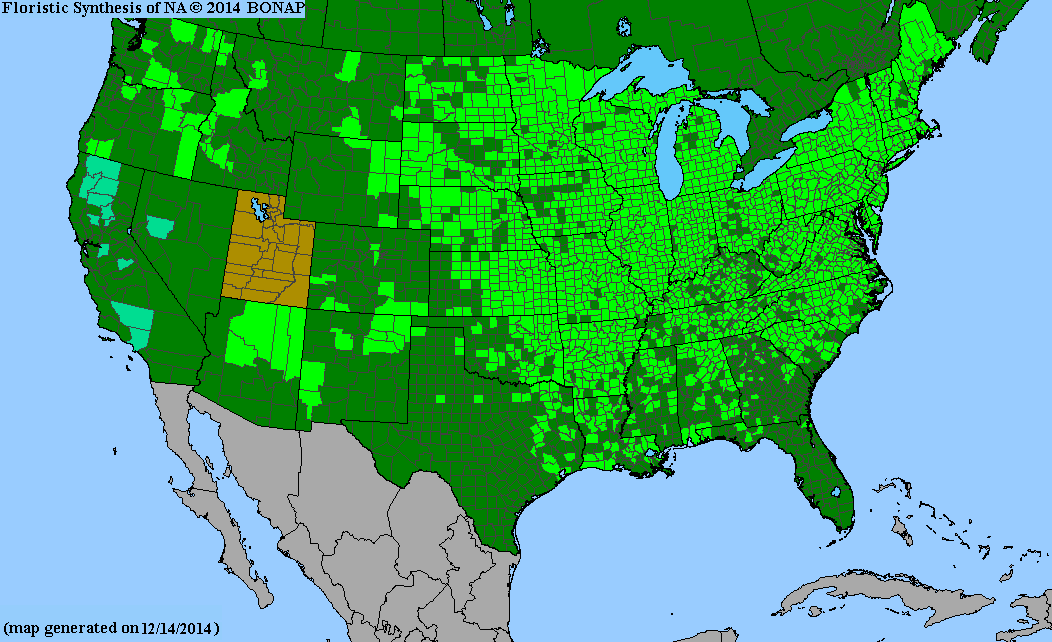
Map Color Key
| Species present in state and native | Species present and not rare | ||
| Species not present in state | Species present and rare |
Kartesz, J.T., The Biota of North America Program (BONAP). 2015. North American Plant Atlas. (http://bonap.net/napa). Chapel Hill, N.C. [maps generated from Kartesz, J.T. 2015. Floristic Synthesis of North America, Version 1.0. Biota of North America Program (BONAP). (in press)].