

| Plant Type | Flowering Perennials |
| Sun Exposure | Full Sun (6+ Hrs) |
| Height | Short (1-3') |
| Moisture | Medium |
| Bloom Months | June, July, August |
| Moisture Needs | Drought Tolerant |
| Season of Interest | Spring (Mar-May), Summer (Jun-Aug), Fall (Sep-Nov) |
| Ecological Significance | Native Bee Friendly, Butterfly Friendly, Hummingbird Friendly |
Description
Butterfly Weed is a vibrant, long-lived native perennial prized for its clusters of fiery orange flowers that light up sunny gardens and prairies from mid to late summer. Its upright, clump-forming habit and narrow, dark green leaves make it a striking accent in both naturalized and formal landscapes. The blooms are rich in nectar and attract an array of butterflies, bees, and other pollinators. After flowering, slender seed pods appear and split open to release silky seeds carried by the wind—another signature feature of milkweeds. Deep taproots make Butterfly Weed exceptionally drought-tolerant and durable once established.
Ecological Value
As a member of the milkweed family, Asclepias tuberosa is an essential host plant for Monarch butterfly caterpillars and also supports Queen and Gray Hairstreak butterflies. Its bright blooms provide abundant nectar for a wide variety of pollinators, including native bees and hummingbirds. This species plays a vital role in supporting declining butterfly populations, making it one of the most ecologically important native perennials for pollinator gardens.
Ideal Growing Conditions
Butterfly Weed thrives in full sun and well-drained, dry to medium soils. It naturally occurs in prairies, open fields, and roadsides, favoring lean, sandy, or rocky soils where drainage is excellent. Once established, it is highly drought-tolerant and requires little to no watering, fertilizer, or maintenance. Because of its deep taproot, it should be planted in a permanent location and not disturbed after establishment. Plants may take a year or two to settle in before blooming heavily, but mature clumps return reliably each year, even in challenging conditions.
Landscape Uses
This showy milkweed is perfect for pollinator gardens, meadows, and sunny borders. Its vivid orange flowers pair beautifully with purple coneflowers, black-eyed Susans, and native grasses. Butterfly Weed’s compact size makes it suitable for smaller spaces and container gardens, while its resilience and ecological value make it a must-have for anyone aiming to support Monarchs and other butterflies.”
Butterfly Weed Native Range
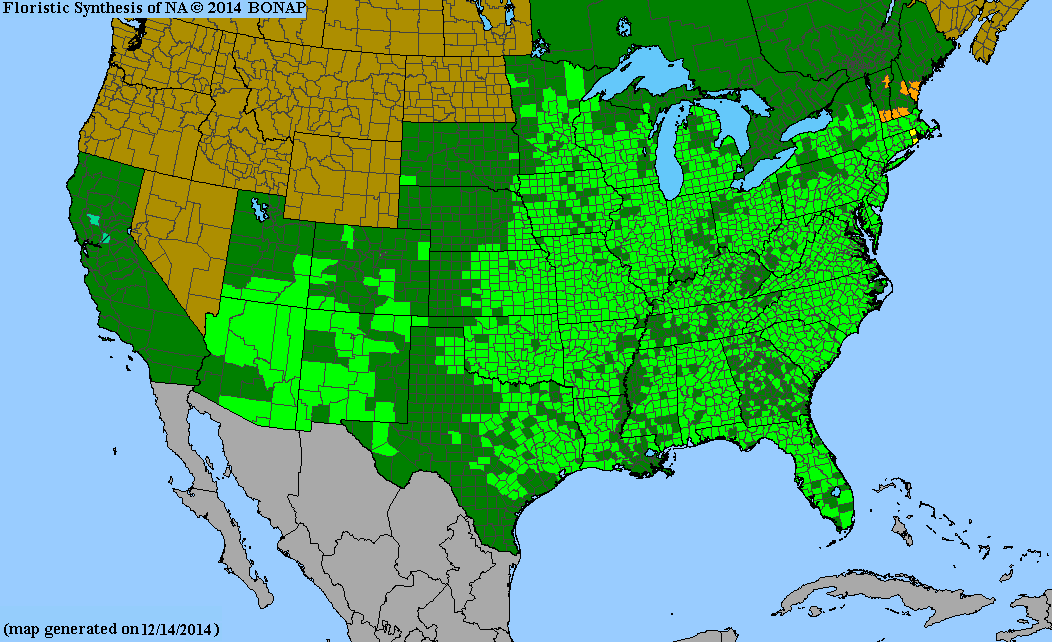
Map Color Key
| Species present in state and native | Species present and not rare | ||
| Species not present in state | Species present and rare |
Kartesz, J.T., The Biota of North America Program (BONAP). 2015. North American Plant Atlas. (http://bonap.net/napa). Chapel Hill, N.C. [maps generated from Kartesz, J.T. 2015. Floristic Synthesis of North America, Version 1.0. Biota of North America Program (BONAP). (in press)].