

"Penstemon calycosus - vrschmalhofer 01" by vrschmalhofer https://www.inaturalist.org/people/vrschmalhofer is licensed under CC BY 4.0 
 .
| Plant Type | Flowering Perennials |
| Sun Exposure | Part Sun / Shade (3-6 Hrs), Shade (0-3 Hrs) |
| Height | Medium (3-5') |
| Bloom Months | May, June |
| Moisture Needs | Normal |
| Season of Interest | Spring (Mar-May) |
| Ecological Significance | Native Bee Friendly, Hummingbird Friendly |
Description
Calico Beardtongue is a refined native perennial that produces upright stems lined with pale lavender, tubular flowers in late spring. The softly colored blooms rise above neat green foliage, creating a graceful vertical accent in woodland-edge and lightly shaded plantings. Its form is structured yet light, allowing it to blend seamlessly with other shade-tolerant perennials without overwhelming the space. As the season progresses, the foliage remains attractive, providing a calm, cohesive presence even after flowering has finished.
Ecological Value
The tubular flowers are especially attractive to native bees and are also visited by hummingbirds, making Calico Beardtongue a valuable early-season nectar source. Blooming in late spring, it supports pollinators at a time when floral resources are still developing in woodland and savanna habitats. As a native species, it contributes to diverse, pollinator-friendly plant communities.
Ideal Growing Conditions
Calico Beardtongue grows best in part shade to shade with average moisture and well-drained soils. It adapts well to typical woodland conditions, including loamy soils and dappled light. Consistent moisture during establishment helps ensure strong growth, but once settled, it is generally low maintenance.
Landscape Uses
This plant is an excellent choice for woodland gardens, shaded borders, and mixed perennial beds where vertical interest and spring bloom are desired. It pairs beautifully with ferns, woodland phlox, sedges, and other shade-tolerant natives, creating layered plantings that offer both beauty and ecological value.
Calico Beardtongue Native Range
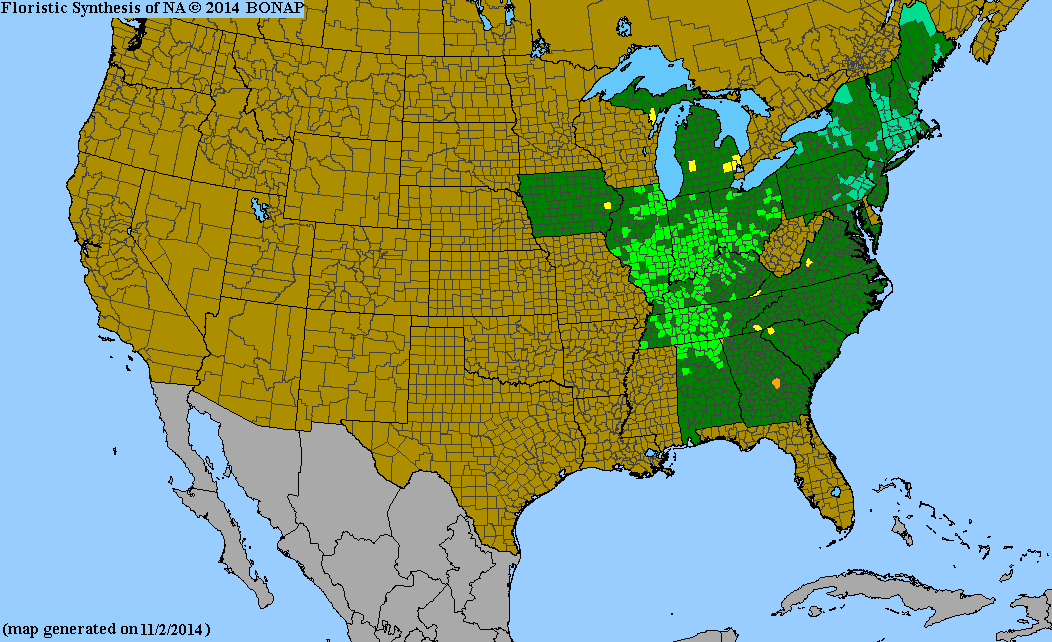
Map Color Key
| Species present in state and native | Species present and not rare | ||
| Species not present in state | Species present and rare |
Kartesz, J.T., The Biota of North America Program (BONAP). 2015. North American Plant Atlas. (http://bonap.net/napa). Chapel Hill, N.C. [maps generated from Kartesz, J.T. 2015. Floristic Synthesis of North America, Version 1.0. Biota of North America Program (BONAP). (in press)].