

| Plant Type | Flowering Perennials |
| Sun Exposure | Shade (0-3 Hrs) |
| Height | Short (1-3') |
| Moisture | Dry, Medium |
| Bloom Months | May, June, July |
| Moisture Needs | Normal |
| Season of Interest | Spring (Mar-May) |
Description
Celandine Poppy is a striking native woodland perennial that brightens shaded gardens in spring with its vivid golden-yellow, poppy-like flowers. Blooming in mid to late spring, each plant produces clusters of four-petaled blooms above deeply lobed, blue-green foliage. The cheerful flowers are followed by fuzzy seed pods that split open to reveal shiny black seeds. This early-season bloomer spreads gently by seed, forming attractive colonies that light up woodland floors. With its bold color and elegant form, Celandine Poppy adds both charm and brightness to shaded native plantings.
Ecological Value
Stylophorum diphyllum provides nectar and pollen for early-emerging bees and flies, offering a valuable food source when few other flowers are in bloom. The seeds possess a fatty appendage called an elaiosome, which attracts ants that help disperse them through a process known as myrmecochory. This mutualistic relationship aids natural spread and supports soil biodiversity. While not a host plant for specific butterfly species, Celandine Poppy contributes to a healthy woodland ecosystem by sustaining early pollinators and enriching the spring understory.
Ideal Growing Conditions
Celandine Poppy thrives in partial to full shade and moist, well-drained, humus-rich soils. It naturally occurs in rich deciduous forests and along shaded stream banks. It prefers consistent moisture during the growing season but cannot tolerate waterlogged soil. Once established, it will self-seed modestly under favorable conditions, creating beautiful drifts over time without becoming invasive. In drier or sunnier areas, supplemental watering and mulch can help maintain vigor. Foliage may go dormant in midsummer, especially in dry conditions, but re-emerges the following spring.
Landscape Uses
Ideal for woodland gardens, shaded borders, and naturalized plantings, Celandine Poppy pairs beautifully with Virginia Bluebells, Wild Geranium, and Woodland Phlox for a layered spring display. Its bright blooms provide a welcome contrast to the greens and blues typical of shade gardens. Perfect for planting beneath trees or along woodland paths, it adds color, texture, and ecological value to shaded spaces. With its early bloom time, gentle self-seeding, and glowing yellow flowers, Celandine Poppy is a must-have native perennial for bringing life and light to woodland landscapes.
Celandine Poppy Native Range
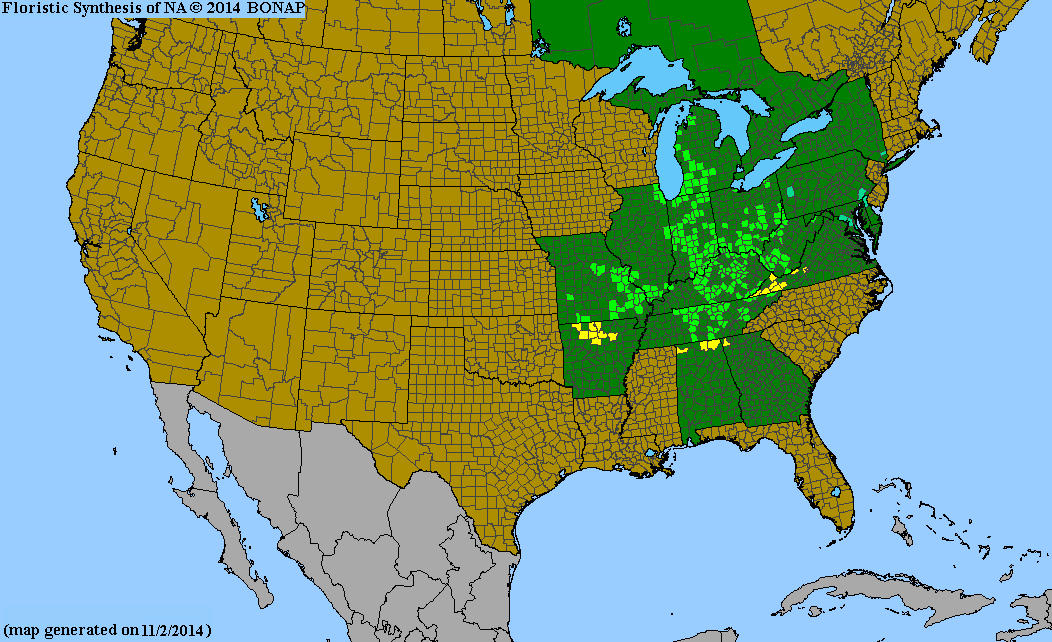
Map Color Key
| Species present in state and native | Species present and not rare | ||
| Species not present in state | Species present and rare |
Kartesz, J.T., The Biota of North America Program (BONAP). 2015. North American Plant Atlas. (http://bonap.net/napa). Chapel Hill, N.C. [maps generated from Kartesz, J.T. 2015. Floristic Synthesis of North America, Version 1.0. Biota of North America Program (BONAP). (in press)].