

| Plant Type | Vines |
| Sun Exposure | Full Sun (6+ Hrs), Part Sun / Shade (3-6 Hrs) |
| Moisture | Dry, Medium |
| Bloom Months | May, June, July |
| Moisture Needs | Normal |
| Season of Interest | Spring (Mar-May), Summer (Jun-Aug) |
| Vine Length | Over 6' |
| Ecological Significance | Butterfly Friendly, Bird Friendly, Hummingbird Friendly |
Description
Coral Honeysuckle is a stunning native vine prized for its tubular coral-red flowers that bloom prolifically from late spring through fall. The trumpet-shaped blooms, often with golden throats, cluster at the tips of twining stems and shine vividly against blue-green foliage. Unlike many introduced honeysuckles, this species is non-invasive and well-behaved, offering long-lasting color and wildlife value without overwhelming surrounding plants. The flowers are followed by small, glossy red berries that ripen in late summer, extending the plant’s ornamental and ecological appeal well into fall. Both hardy and showy, Coral Honeysuckle adds vertical beauty, fragrance, and ecological richness to native landscapes.
Ecological Value
Lonicera sempervirens is one of the most valuable native vines for pollinators and birds. Its tubular flowers are a favorite of hummingbirds, especially ruby-throated hummingbirds, and also attract long-tongued bees, butterflies, and moths. The berries provide food for songbirds, including robins, cedar waxwings, and thrushes, while its dense growth offers nesting sites and cover for small birds. Because it blooms for such an extended period, Coral Honeysuckle serves as an important nectar source across much of the growing season. It also resists deer browsing and contributes year-round structure and habitat to naturalized gardens and woodland edges.
Ideal Growing Conditions
Coral Honeysuckle thrives in full sun to partial shade and moist to well-drained soils, naturally occurring along woodland edges, fences, and thickets. It prefers loamy or sandy soils rich in organic matter but adapts readily to clay. Best flowering occurs in full sun, while light shade helps preserve foliage color in hot climates. Once established, it is moderately drought-tolerant and long-lived. It climbs by twining and benefits from a sturdy support such as a trellis, arbor, or fence.
Landscape Uses
Ideal for trellises, fences, arbors, and woodland edges, Coral Honeysuckle provides brilliant color, fragrance, and exceptional wildlife value. It pairs beautifully with Prairie Rose, New Jersey Tea, and Early Wild Rose for a bird- and pollinator-friendly planting. Its coral-red blooms add drama to sunny or lightly shaded areas, while its berries sustain birds through late summer. Hardy, non-invasive, and ecologically vibrant, Coral Honeysuckle is one of the best native vines for bringing both beauty and biodiversity to the landscape.
Native in southern areas of the US. Not aggressive, according to the Morton Arboretum.
Coral Honeysuckle Native Range
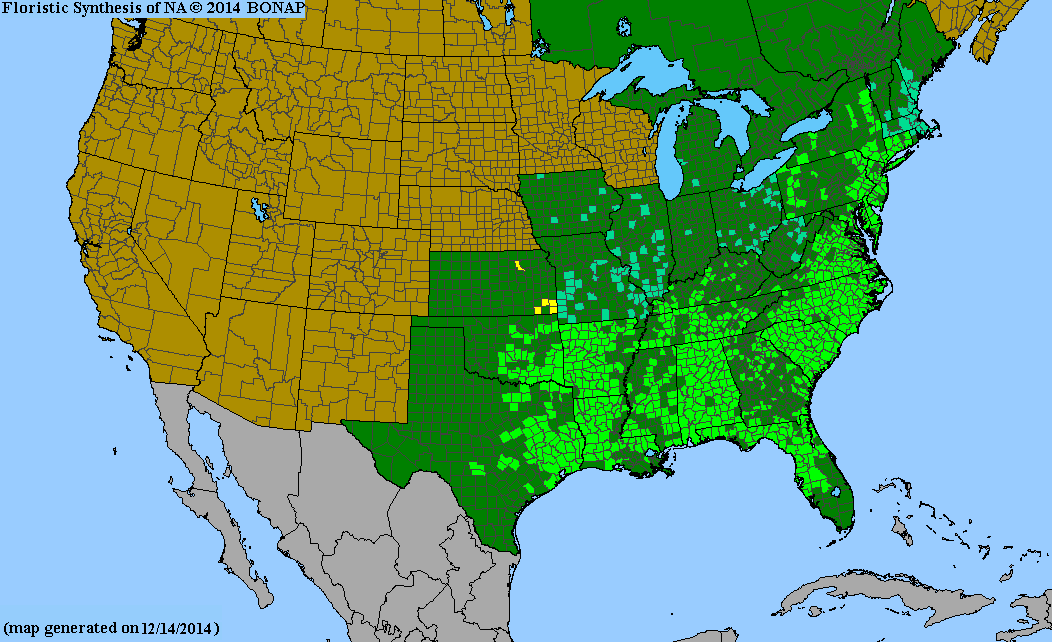
Map Color Key
| Species present in state and native | Species present and not rare | ||
| Species not present in state | Species present and rare |
Kartesz, J.T., The Biota of North America Program (BONAP). 2015. North American Plant Atlas. (http://bonap.net/napa). Chapel Hill, N.C. [maps generated from Kartesz, J.T. 2015. Floristic Synthesis of North America, Version 1.0. Biota of North America Program (BONAP). (in press)].