

| Plant Type | Flowering Perennials |
| Sun Exposure | Full Sun (6+ Hrs), Part Sun / Shade (3-6 Hrs) |
| Height | Medium (3-5') |
| Moisture | Medium |
| Bloom Months | June, July |
| Moisture Needs | Normal |
| Season of Interest | Spring (Mar-May), Summer (Jun-Aug) |
| Ecological Significance | Native Bee Friendly, Butterfly Friendly, Hummingbird Friendly |
Description
Foxglove Beardtongue is an elegant native perennial that brings early summer brightness to gardens and prairies with its showy clusters of tubular white flowers held on tall, slender stems. Blooming in late spring and early summer, it adds height, texture, and movement to mixed plantings. The flowers resemble small foxgloves—hence the common name—and are highly attractive to bees and hummingbirds. The glossy green foliage forms a neat rosette at the base, often developing rich red tones in fall. Adaptable and long-lived, Foxglove Beardtongue is both beautiful and dependable in a wide range of conditions.
Ecological Value
Penstemon digitalis provides nectar for bees, butterflies, and hummingbirds, especially long-tongued species like bumblebees that can reach deep into the tubular blooms. It is also a host plant for several moth and butterfly caterpillars, including the Baltimore Checkerspot. The seed capsules that follow flowering are used by small birds, adding extended wildlife value. Its early bloom time fills an important seasonal gap between spring ephemerals and summer wildflowers, supporting a continuous supply of nectar for pollinators.
Ideal Growing Conditions
Foxglove Beardtongue thrives in full sun to light shade and medium to dry, well-drained soils. It naturally occurs in open meadows, prairies, and along roadsides, making it highly adaptable and drought-tolerant once established. It performs well in clay, loam, or rocky soils, as long as drainage is adequate. Avoid heavy, wet sites where the roots may rot. This hardy perennial is reliable, low-maintenance, and tolerant of both drought and poor soils.
Landscape Uses
Ideal for pollinator gardens, prairie plantings, and sunny borders, Foxglove Beardtongue combines beautifully with Black-eyed Susans, Coneflowers, and native grasses. Its upright form and delicate flowers add structure and contrast to naturalistic landscapes. Whether used as a specimen plant, in mass plantings, or as part of a pollinator-friendly mix, Foxglove Beardtongue offers refined beauty, toughness, and vital ecological benefits to native gardens.
Foxglove Beardtongue Native Range
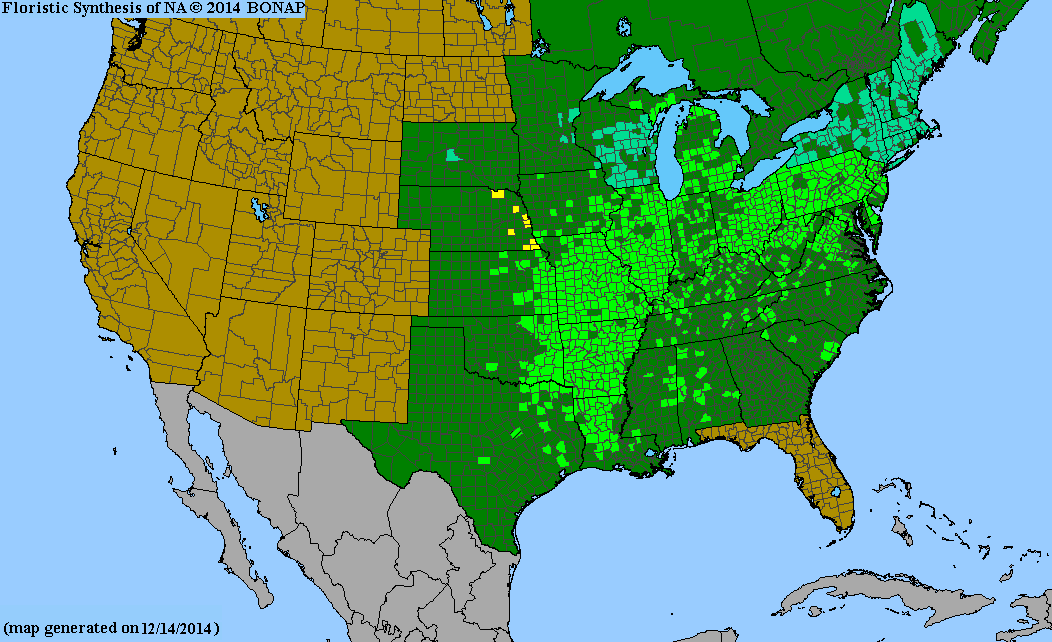
Map Color Key
| Species present in state and native | Species present and not rare | ||
| Species not present in state | Species present and rare |
Kartesz, J.T., The Biota of North America Program (BONAP). 2015. North American Plant Atlas. (http://bonap.net/napa). Chapel Hill, N.C. [maps generated from Kartesz, J.T. 2015. Floristic Synthesis of North America, Version 1.0. Biota of North America Program (BONAP). (in press)].