

| Plant Type | Flowering Perennials |
| Sun Exposure | Full Sun (6+ Hrs), Part Sun / Shade (3-6 Hrs) |
| Height | Short (1-3') |
| Moisture | Dry, Medium |
| Bloom Months | May, June, July |
| Moisture Needs | Drought Tolerant |
| Season of Interest | Summer (Jun-Aug) |
| Ecological Significance | Native Bee Friendly, Butterfly Friendly, Hummingbird Friendly |
Description
Hairy Beardtongue is a charming, compact native perennial that brings soft color and pollinator activity to early summer gardens. Its upright stems are lined with narrow, toothed leaves and topped with clusters of tubular flowers in delicate shades of lavender to pink. Each bloom flares open at the end, inviting pollinators and adding subtle beauty to sunny meadows, prairies, and borders. Blooming in late spring through early summer, this hardy plant is noted for its fine-textured foliage, resilience, and graceful form. The leaves and stems are covered with fine hairs, giving the plant a soft, silvery sheen that glows in sunlight.
Ecological Value
Penstemon hirsutus provides nectar for bees, butterflies, and hummingbirds, particularly long-tongued bees such as bumblebees that can access its tubular blooms. It also serves as a host plant for several butterfly and moth species, including the Baltimore Checkerspot. Its early bloom time helps bridge the gap between spring ephemerals and summer wildflowers, offering an important nectar source when few other native species are flowering. Its dense basal foliage offers habitat for beneficial insects and small pollinators throughout the growing season.
Ideal Growing Conditions
Hairy Beardtongue thrives in full sun to light shade and dry to medium, well-drained soils. It naturally occurs in open prairies, savannas, and rocky slopes, tolerating sandy or gravelly conditions. Once established, it is highly drought-tolerant and requires little maintenance. It prefers lean soils—overly rich conditions may cause floppy growth. Deadheading after flowering can encourage tidiness and prevent excessive self-seeding. Hardy and adaptable, Hairy Beardtongue is an easy, reliable performer in both formal gardens and naturalistic plantings.
Landscape Uses
Ideal for pollinator gardens, prairie borders, and rock gardens, Hairy Beardtongue adds elegance and texture to sunny landscapes. It pairs beautifully with Butterfly Weed, Prairie Smoke, and Little Bluestem for a cohesive early-summer display. Its upright form and silvery-green foliage provide a subtle contrast to bolder prairie species, while its blooms attract continuous pollinator activity. Low-maintenance, long-lived, and ecologically valuable, Hairy Beardtongue is a versatile choice for gardeners seeking a tough yet delicate native wildflower that thrives in dry, sunny conditions.
Hairy Beardtongue Native Range
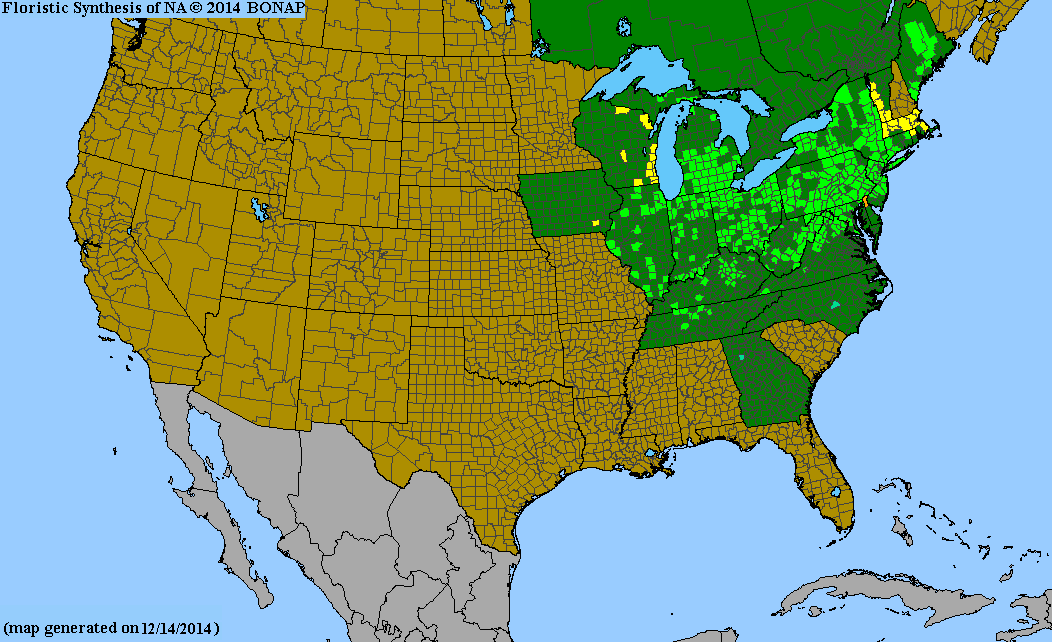
Map Color Key
| Species present in state and native | Species present and not rare | ||
| Species not present in state | Species present and rare |
Kartesz, J.T., The Biota of North America Program (BONAP). 2015. North American Plant Atlas. (http://bonap.net/napa). Chapel Hill, N.C. [maps generated from Kartesz, J.T. 2015. Floristic Synthesis of North America, Version 1.0. Biota of North America Program (BONAP). (in press)].