

| Sun Exposure | Full Sun (6+ Hrs) |
| Height | Short (1-3') |
| Moisture | Dry, Medium |
| Bloom Months | May, June, July |
| Moisture Needs | Drought Tolerant |
| Season of Interest | Summer (Jun-Aug), Fall (Sep-Nov) |
| Ecological Significance | Winter Bird Feed |
Description
Little Bluestem is a signature native prairie grass celebrated for its fine texture, upright form, and remarkable year-round color. Its slender blue-green blades emerge in spring, deepening to steel-blue by midsummer, and turning brilliant shades of copper, red, and purple in fall. In late summer, it produces delicate, airy seed heads that shimmer in sunlight and persist through winter, providing both beauty and structure in the dormant season. This resilient, clumping grass thrives in dry, sunny locations and brings movement, texture, and subtle color shifts to naturalistic landscapes.
Ecological Value
Schizachyrium scoparium is an essential prairie species, providing food and shelter for a variety of wildlife. It is a host plant for several skipper butterflies, including the Cobweb Skipper and Dusted Skipper, as well as grasshoppers that serve as food for birds. Its dense basal clumps offer nesting sites for ground-dwelling birds and overwintering habitat for insects. The seeds feed small songbirds in fall and winter, while the plant’s deep root system helps stabilize soil, prevent erosion, and support healthy prairie ecosystems. By remaining standing through the winter, it continues to provide vital cover and structure for wildlife.
Ideal Growing Conditions
Little Bluestem thrives in full sun and dry to medium, well-drained soils, performing best in sandy or rocky conditions. It naturally occurs in prairies, open fields, and savannas and is highly drought-tolerant once established. It prefers lean soils and does not require fertilization or rich organic matter. Adaptable and low-maintenance, it performs well even in poor soils where other plants may struggle. Because of its tolerance for drought and heat, Little Bluestem is a cornerstone species for resilient, climate-adapted landscapes.
Landscape Uses
Ideal for prairie gardens, meadows, and naturalized plantings, Little Bluestem adds texture, color, and ecological value to sunny landscapes. It pairs beautifully with Butterfly Weed, Purple Coneflower, and Blazing Stars for a dynamic summer display, and with Asters and Goldenrods for fall color. Its vertical form contrasts well with broader-leaved perennials and complements native wildflowers through all seasons. Durable, visually stunning, and ecologically vital, Little Bluestem is one of the most important native grasses for supporting wildlife and restoring prairie diversity.
Little Bluestem Native Range
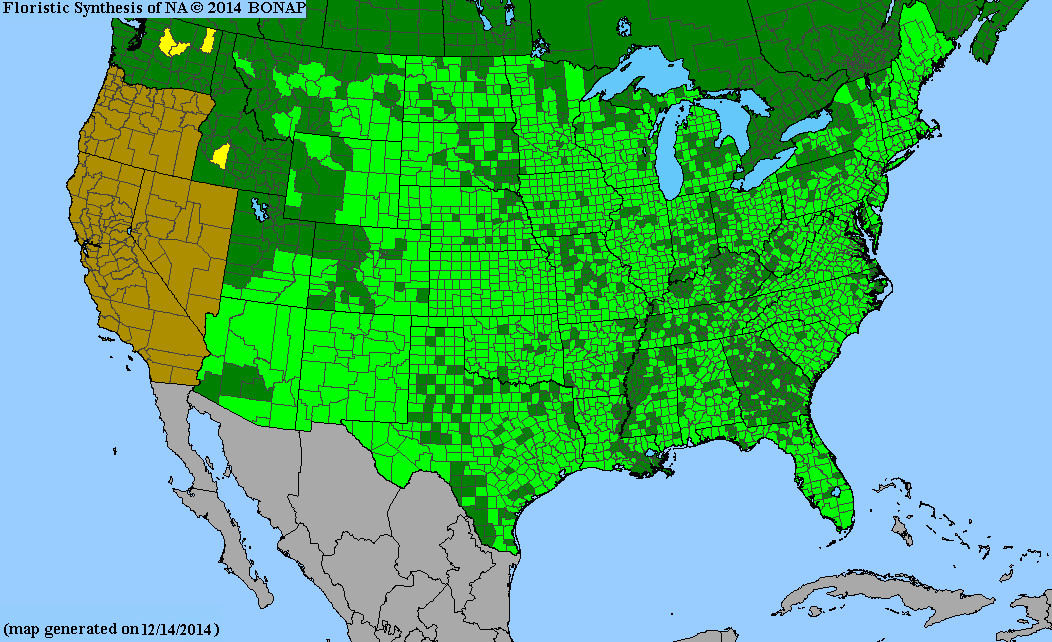
Map Color Key
| Species present in state and native | Species present and not rare | ||
| Species not present in state | Species present and rare |
Kartesz, J.T., The Biota of North America Program (BONAP). 2015. North American Plant Atlas. (http://bonap.net/napa). Chapel Hill, N.C. [maps generated from Kartesz, J.T. 2015. Floristic Synthesis of North America, Version 1.0. Biota of North America Program (BONAP). (in press)].