

| Plant Type | Flowering Perennials |
| Sun Exposure | Full Sun (6+ Hrs), Part Sun / Shade (3-6 Hrs) |
| Height | Medium (3-5') |
| Moisture | Medium, Wet |
| Bloom Months | August, September |
| Moisture Needs | Normal |
| Season of Interest | Summer (Jun-Aug), Fall (Sep-Nov) |
| Ecological Significance | Native Bee Friendly, Butterfly Friendly, Hummingbird Friendly |
Description
Obedient Plant is a showy native perennial known for its tall, upright spikes of tubular flowers that resemble snapdragons. Blooming from late summer into early fall, it brings cheerful color and structure to gardens just as many earlier perennials begin to fade. The flowers range from soft pink to lavender and are arranged neatly along square stems, opening gradually from bottom to top. The common name “Obedient Plant” comes from the unique trait of its blossoms—they can be gently pushed and will temporarily stay in place. Its clean, lance-shaped foliage and vertical form make it an excellent backdrop or filler in sunny borders and pollinator plantings.
Ecological Value
Physostegia virginiana is a nectar-rich favorite of hummingbirds, bumblebees, and butterflies. The tubular flowers are perfectly suited for hummingbird feeding, while native bees and long-tongued pollinators visit in abundance. Though not a larval host species, it plays an important role in supporting late-season pollinators with reliable nectar when few other plants are blooming.
Ideal Growing Conditions
Obedient Plant thrives in full sun to partial shade and prefers moist, well-drained soils, though it can tolerate a wide range of soil types. It naturally grows in moist meadows and along stream edges, but it adapts well to average garden soil. Once established, it can spread vigorously by rhizomes, especially in rich or consistently moist sites. To manage its growth, consider dividing clumps every few years or situating it among strong-growing companions. Regular moisture promotes taller plants and longer bloom periods, while drier soils may help limit spreading.
Landscape Uses
This versatile perennial shines in rain gardens, sunny borders, and pollinator plantings. Its pink flower spikes pair beautifully with Joe Pye Weed, New England Aster, and native grasses for a dynamic late-summer display. Because of its upright form and long bloom time, Obedient Plant adds both height and color to mixed plantings. For best visual impact, plant in groups of three or more and allow space for its natural spreading habit. Whether used in formal gardens or wildflower meadows, Obedient Plant provides a reliable, long-lasting show that supports hummingbirds and late-season pollinators.
Obedient Plant Native Range
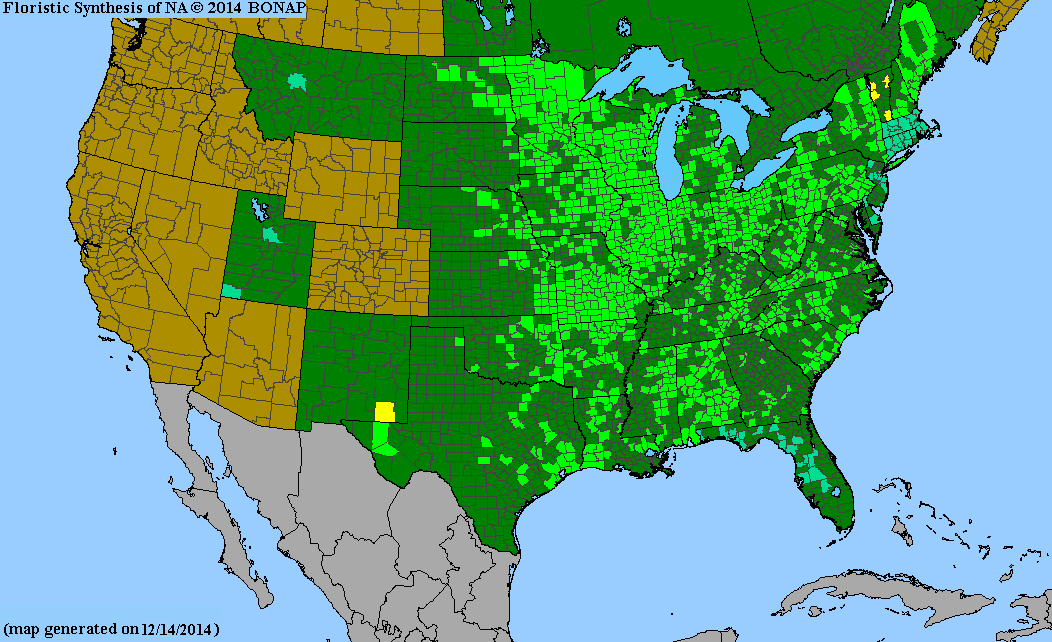
Map Color Key
| Species present in state and native | Species present and not rare | ||
| Species not present in state | Species present and rare |
Kartesz, J.T., The Biota of North America Program (BONAP). 2015. North American Plant Atlas. (http://bonap.net/napa). Chapel Hill, N.C. [maps generated from Kartesz, J.T. 2015. Floristic Synthesis of North America, Version 1.0. Biota of North America Program (BONAP). (in press)].