

| Plant Type | Flowering Perennials |
| Sun Exposure | Full Sun (6+ Hrs) |
| Height | Short (1-3') |
| Moisture | Dry, Medium |
| Bloom Months | May, June, July |
| Moisture Needs | Drought Tolerant |
| Season of Interest | Summer (Jun-Aug), Winter (Dec - Feb) |
| Ecological Significance | Native Bee Friendly, Butterfly Friendly, Bird Friendly, Hummingbird Friendly, Winter Bird Feed |
Description
Pale Purple Coneflower is a classic prairie perennial distinguished by its long, gracefully drooping pale pink petals and prominent central cones. Blooming in early summer, the flowers rise above narrow, coarse-textured foliage, creating an airy, elegant silhouette that stands out in prairie and meadow plantings. Compared to more compact coneflowers, this species has a looser, more natural form that blends seamlessly into prairie landscapes. Even after flowering, the upright stems and developing seed heads continue to provide structure and visual interest as the season progresses.
Ecological Value
The flowers attract a wide range of native bees and butterflies, serving as an important early-summer nectar and pollen source. As the blooms fade, the seed heads mature and provide valuable food for birds, extending the plant’s ecological value into late summer and fall. Pale Purple Coneflower also supports a diverse community of beneficial insects, making it a strong contributor to healthy prairie ecosystems.
Ideal Growing Conditions
This plant thrives in full sun and prefers well-drained soils with dry to medium moisture levels. It performs particularly well in sandy or gravelly soils and is highly drought tolerant once established. Poor drainage should be avoided, as consistently wet soils can shorten its lifespan. Once settled, it is long-lived and low maintenance.
Landscape Uses
Pale Purple Coneflower is an excellent choice for prairie gardens, native meadows, and mixed perennial borders where both structure and pollinator support are priorities. It pairs beautifully with native grasses, blazing star, and other summer-blooming prairie plants. Leaving the seed heads standing into fall and winter adds seasonal interest and supports birds, making this species both visually and ecologically valuable.
Pale Purple Coneflower Native Range
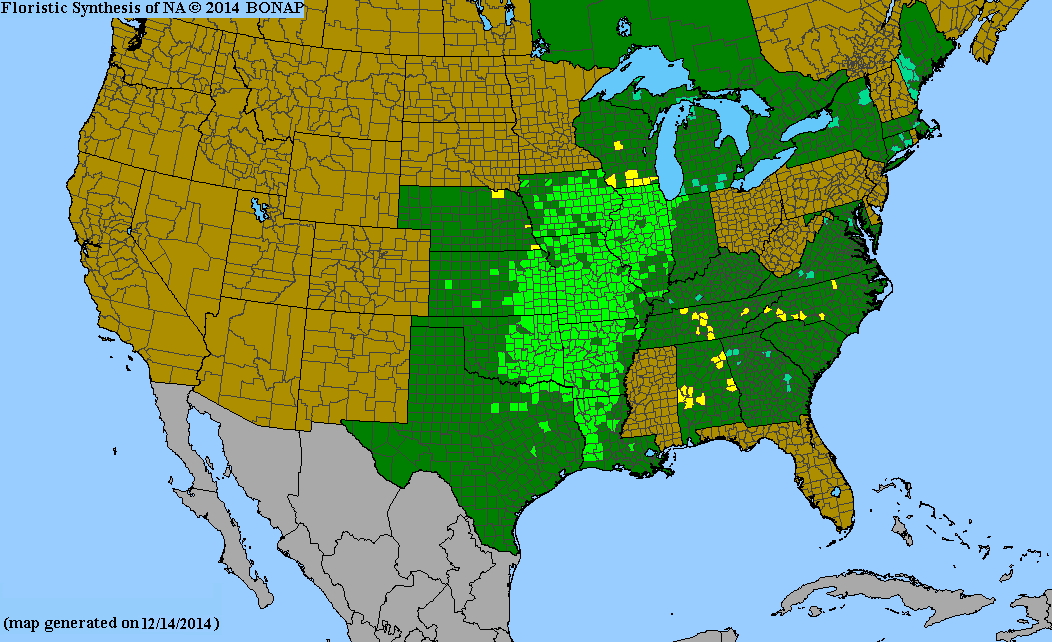
Map Color Key
| Species present in state and native | Species present and not rare | ||
| Species not present in state | Species present and rare |
Kartesz, J.T., The Biota of North America Program (BONAP). 2015. North American Plant Atlas. (http://bonap.net/napa). Chapel Hill, N.C. [maps generated from Kartesz, J.T. 2015. Floristic Synthesis of North America, Version 1.0. Biota of North America Program (BONAP). (in press)].