

"Carex muskingumensis Little Midge 1zz" by Photo by David J. Stang is licensed under CC BY-SA 4.0 

 .
| Plant Type | Grasses & Sedges |
| Sun Exposure | Part Sun / Shade (3-6 Hrs) |
| Height | Short (1-3') |
| Bloom Months | June, July |
| Moisture Needs | Normal, Flood Tolerant |
| Season of Interest | Summer (Jun-Aug), Fall (Sep-Nov) |
| Ecological Significance | Bird Friendly |
Description
Palm Sedge is a distinctive native sedge recognized for its bright green, palm-like whorls of foliage that radiate outward from upright stems. The bold, architectural form gives it a look unlike most sedges, adding strong vertical texture and visual rhythm to moist landscapes. Its foliage remains attractive from spring through fall, creating a lively, structured presence even when surrounding plants are not in bloom. In mass plantings, Palm Sedge reads as both graphic and natural, making it a standout in wetland-inspired designs.
Ecological Value
Palm Sedge provides valuable nesting cover for birds and supports a variety of beneficial insects that contribute to healthy wetland and riparian ecosystems. As a native sedge, it also helps stabilize soil in moist areas and supports the insect communities that form the foundation of aquatic and semi-aquatic food webs.
Ideal Growing Conditions
This sedge prefers part shade but can tolerate a range of light conditions where moisture is consistent. It grows best in moist to wet soils and is well adapted to sites that experience seasonal flooding. While tolerant of heavier soils, it performs best where soil moisture is reliably available throughout the growing season.
Landscape Uses
Palm Sedge is ideal for rain gardens, pond edges, wet meadows, and shaded low areas where moisture-loving plants are needed. It works beautifully as a textural accent among flowering wetland perennials and pairs well with native irises, cardinal flower, and other plants adapted to moist conditions. Palm Sedge adds both striking form and ecological value to water-rich landscapes.
Palm Sedge Native Range
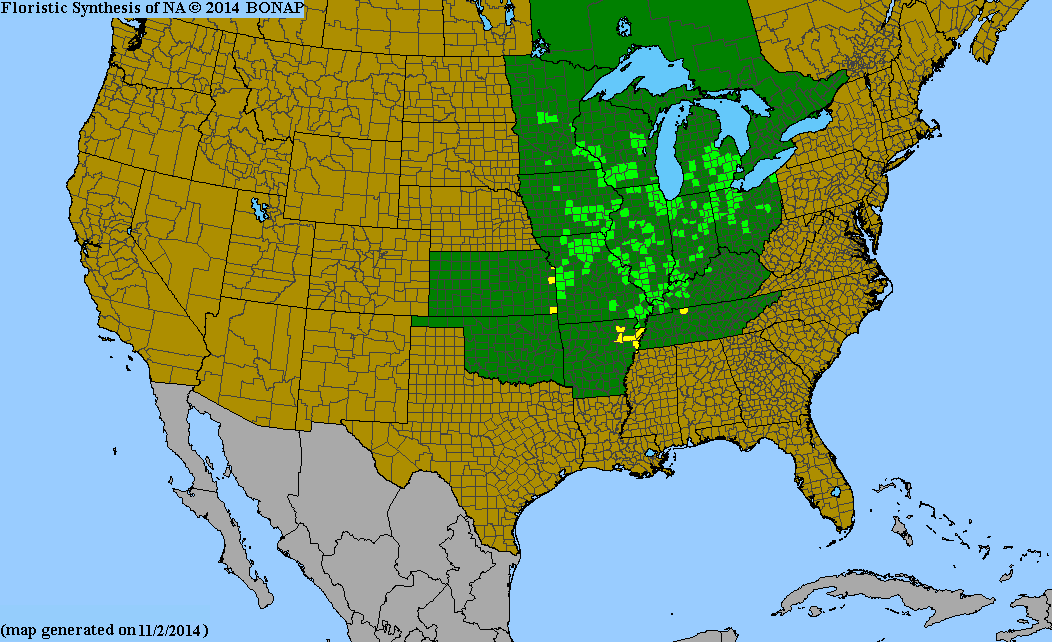
Map Color Key
| Species present in state and native | Species present and not rare | ||
| Species not present in state | Species present and rare |
Kartesz, J.T., The Biota of North America Program (BONAP). 2015. North American Plant Atlas. (http://bonap.net/napa). Chapel Hill, N.C. [maps generated from Kartesz, J.T. 2015. Floristic Synthesis of North America, Version 1.0. Biota of North America Program (BONAP). (in press)].