

| Plant Type | Flowering Perennials |
| Sun Exposure | Full Sun (6+ Hrs) |
| Height | Ground (<1'), Short (1-3') |
| Moisture | Dry, Medium |
| Bloom Months | May, June, July |
| Moisture Needs | Normal |
| Season of Interest | Spring (Mar-May) |
| Ecological Significance | Native Bee Friendly |
Description
Prairie Smoke is a beloved native prairie perennial admired for both its elegant nodding blooms and its unique, feathery seed heads. In spring, it produces clusters of drooping pinkish-red, bell-shaped flowers held on slender stems above fern-like foliage. As the blooms fade, they transform into wispy, silvery-pink plumes that resemble drifting smoke, giving the plant its poetic name. The soft, mounding leaves remain attractive throughout the growing season, turning reddish in fall. Compact, resilient, and visually distinctive, Prairie Smoke brings subtle beauty and movement to dry, sunny landscapes.
Ecological Value
Geum triflorum provides early-season nectar and pollen for native bees and small pollinators emerging in spring. Its flowers are especially attractive to bumblebees, which have the strength to open the bell-shaped blooms. The plant is also a host species for the Grizzled Skipper butterfly and contributes to the diversity of early prairie ecosystems. Its deep, fibrous roots help prevent erosion and improve soil structure, supporting long-term prairie health. Even in dormancy, its dried seed heads offer texture and habitat value to overwintering insects.
Ideal Growing Conditions
Prairie Smoke thrives in full sun and dry to medium, well-drained soils, preferring sandy or gravelly prairie soils. It naturally occurs in dry prairies, open slopes, and rocky glades. Once established, it is exceptionally drought-tolerant and long-lived, thriving in lean soils with minimal nutrients. It does not tolerate wet or heavy clay conditions. Spreading slowly by rhizomes, it forms small colonies over time, creating low, soft mats of foliage that integrate beautifully into naturalistic plantings.
Landscape Uses
Ideal for rock gardens, prairie borders, and native groundcover plantings, Prairie Smoke adds texture, charm, and ecological function to early-season landscapes. It pairs beautifully with Nodding Onion, Butterfly Weed, and Little Bluestem for a classic dry prairie palette. Its delicate seed heads catch the light and provide interest long after flowering, making it a favorite among native plant gardeners and photographers alike. Hardy, low-growing, and deeply rooted in prairie ecology, Prairie Smoke is a small plant with extraordinary character and habitat value.
Prairie Smoke Native Range
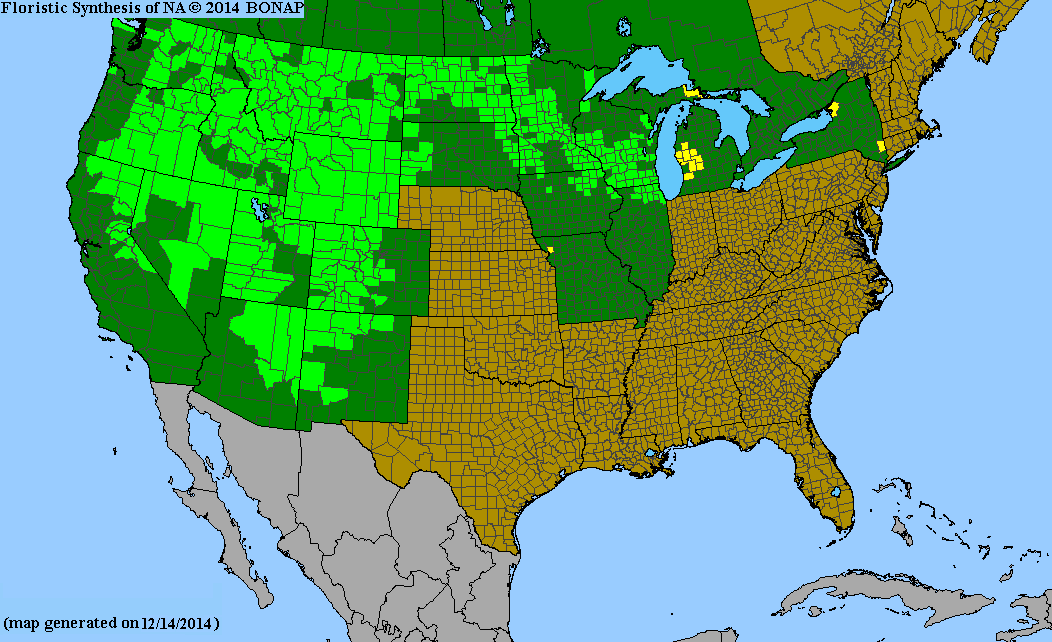
Map Color Key
| Species present in state and native | Species present and not rare | ||
| Species not present in state | Species present and rare |
Kartesz, J.T., The Biota of North America Program (BONAP). 2015. North American Plant Atlas. (http://bonap.net/napa). Chapel Hill, N.C. [maps generated from Kartesz, J.T. 2015. Floristic Synthesis of North America, Version 1.0. Biota of North America Program (BONAP). (in press)].