

| Plant Type | Flowering Perennials |
| Sun Exposure | Full Sun (6+ Hrs), Part Sun / Shade (3-6 Hrs) |
| Height | Medium (3-5') |
| Moisture | Medium |
| Bloom Months | July, August, September |
| Moisture Needs | Drought Tolerant |
| Season of Interest | Summer (Jun-Aug), Winter (Dec - Feb) |
| Ecological Significance | Native Bee Friendly, Butterfly Friendly, Bird Friendly, Hummingbird Friendly, Winter Bird Feed |
Description
Purple Coneflower is one of the most iconic and beloved native perennials, prized for its daisy-like purple petals surrounding a prominent, coppery-orange cone. Blooming from mid to late summer, it adds vibrant color and structure to prairies, pollinator gardens, and mixed borders. Its tall, sturdy stems and rough, dark green leaves give it a robust presence in the landscape, while its long bloom period ensures weeks of color. The seed heads persist through fall and winter, adding visual interest and providing a natural food source for birds. Tough, adaptable, and strikingly beautiful, Purple Coneflower is both ornamental and ecologically valuable.
Ecological Value
Echinacea purpurea is a pollinator favorite, attracting bees, butterflies, and skippers throughout its long bloom period. It serves as a larval host plant for the Silvery Checkerspot and Pearl Crescent butterflies and provides nectar for Monarchs, Swallowtails, and many native bee species. In fall and winter, finches and other seed-eating birds feed on its dried seed heads. Its deep root system helps improve soil health and drought resilience, making it an essential component of sustainable native plantings.
Ideal Growing Conditions
Purple Coneflower thrives in full sun and well-drained, medium-moist soils, though it tolerates dry conditions once established. It grows naturally in open prairies and meadows, where it enjoys good air circulation and strong light. While it adapts to a variety of soil types, overly rich soil can lead to lanky growth, and wet, heavy soil can cause root rot. Removing spent blooms encourages prolonged flowering, though many gardeners leave the seed heads standing for birds and winter interest. It is long-lived, dependable, and one of the easiest native perennials to grow successfully in both formal and naturalized settings.
Landscape Uses
Perfect for pollinator gardens, borders, and prairie plantings, Purple Coneflower pairs beautifully with Black-eyed Susan, Blazing Stars, and native grasses for a classic summer display. It adds bold color and height to mixed plantings while offering crucial habitat value. Excellent as a cut flower, it also provides seed and structure through the colder months. Durable, drought-tolerant, and endlessly adaptable, Purple Coneflower is a cornerstone species for anyone looking to create a vibrant, wildlife-friendly native garden.


Purple Coneflower Native Range
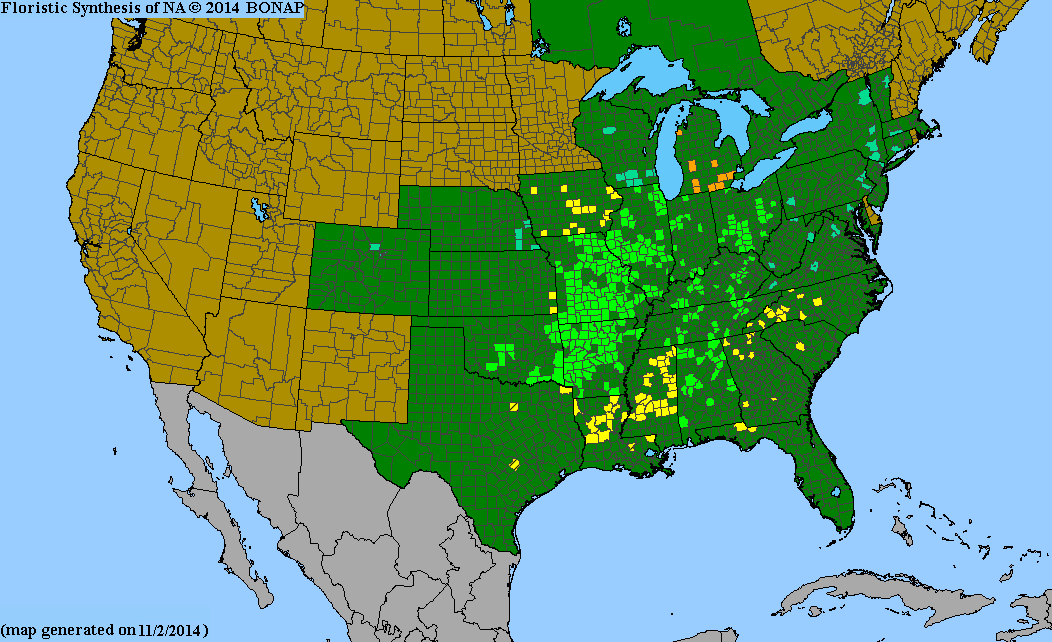
Map Color Key
| Species present in state and native | Species present and not rare | ||
| Species not present in state | Species present and rare |
Kartesz, J.T., The Biota of North America Program (BONAP). 2015. North American Plant Atlas. (http://bonap.net/napa). Chapel Hill, N.C. [maps generated from Kartesz, J.T. 2015. Floristic Synthesis of North America, Version 1.0. Biota of North America Program (BONAP). (in press)].