

| Plant Type | Flowering Perennials |
| Sun Exposure | Full Sun (6+ Hrs) |
| Height | Ground (<1') |
| Bloom Months | June, July, August |
| Moisture Needs | Drought Tolerant |
| Season of Interest | Summer (Jun-Aug) |
| Ecological Significance | Native Bee Friendly, Butterfly Friendly |
Description
Purple Poppy Mallow is a low-growing native perennial that forms a spreading mat of softly lobed green foliage, creating a lush ground-hugging presence in sunny landscapes. From early through late summer, it produces vivid magenta, cup-shaped flowers that open each morning and close by afternoon, creating a constantly shifting display of color and movement. The flowers are large relative to the plant’s size, giving it an outsized visual impact despite its low stature. Its trailing habit allows it to weave naturally through surrounding plants or spill gracefully over edges, lending a relaxed, prairie-inspired look that feels both vibrant and informal.
Ecological Value
This long-blooming plant provides a dependable nectar source for native bees and butterflies throughout the summer months, making it especially valuable during hot, dry periods when other plants may slow their bloom. Its dense, spreading growth helps stabilize soil, reduce erosion, and suppress weeds, supporting healthier prairie and open-ground ecosystems. By covering bare ground, Purple Poppy Mallow also helps moderate soil temperatures and retain moisture at the surface, contributing to overall site resilience.
Ideal Growing Conditions
Purple Poppy Mallow thrives in full sun and well-drained soils with dry to medium moisture. It performs best in sandy, gravelly, or rocky soils where drainage is excellent and competition from more aggressive plants is limited. Once established, it is highly drought tolerant and requires little supplemental watering. Poorly drained or consistently wet soils should be avoided, as excess moisture can shorten the plant’s lifespan.
Landscape Uses
This perennial is ideal for prairie gardens, rock gardens, slopes, hellstrips, and the front of borders where a durable, low-growing plant is needed. It works especially well cascading over walls or edging paths, and pairs beautifully with native grasses and upright prairie perennials such as coneflowers and blazing star. Purple Poppy Mallow adds vibrant color at ground level while contributing meaningful ecological value, making it both a visual standout and a functional landscape plant.
Purple Poppy Mallow Native Range
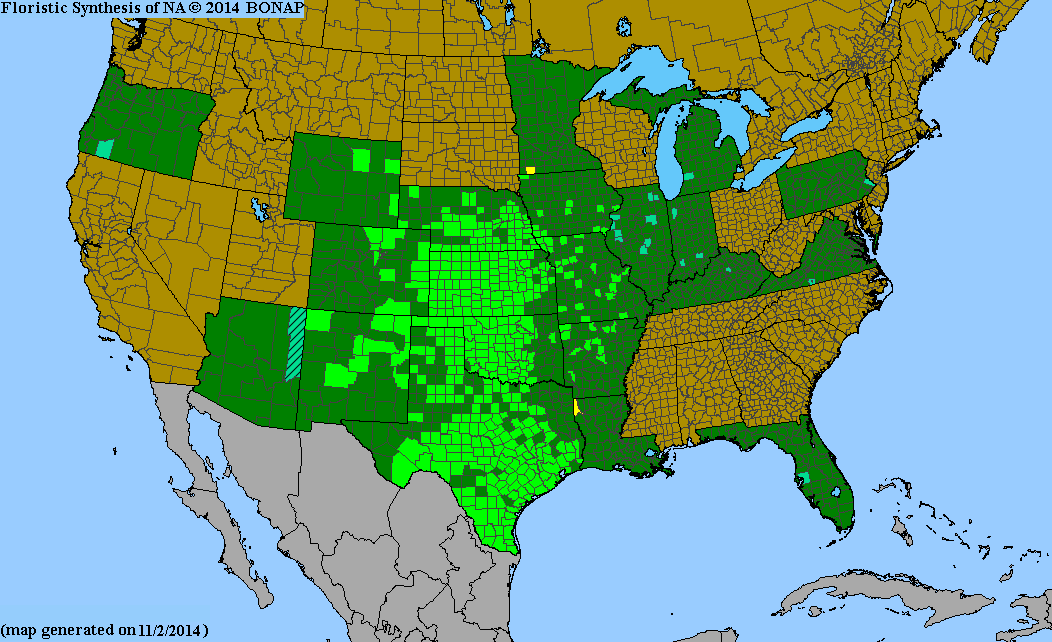
Map Color Key
| Species present in state and native | Species present and not rare | ||
| Species not present in state | Species present and rare |
Kartesz, J.T., The Biota of North America Program (BONAP). 2015. North American Plant Atlas. (http://bonap.net/napa). Chapel Hill, N.C. [maps generated from Kartesz, J.T. 2015. Floristic Synthesis of North America, Version 1.0. Biota of North America Program (BONAP). (in press)].