

| Plant Type | Shrubs |
| Sun Exposure | Full Sun (6+ Hrs), Part Sun / Shade (3-6 Hrs) |
| Moisture | Dry, Medium |
| Bloom Months | May, June, July |
| Moisture Needs | Normal |
| Season of Interest | Spring (Mar-May), Summer (Jun-Aug), Fall (Sep-Nov) |
| Shrub Height | Over 6' |
| Shrub Spread | 3' to 6' |
| Ecological Significance | Native Bee Friendly, Butterfly Friendly, Hummingbird Friendly |
Description
Red Chokeberry is a striking native shrub that offers year-round beauty and ecological value. In spring, it produces clusters of small white flowers that brighten woodland edges and wetlands. Through summer, its glossy green leaves form a dense, upright habit, followed by vibrant clusters of red berries that ripen in late summer and persist through winter. In fall, the foliage turns brilliant shades of red, orange, and burgundy, creating a spectacular seasonal display. Adaptable and hardy, Red Chokeberry thrives in both wet and dry conditions, providing reliable color, fruit, and habitat across multiple seasons.
Ecological Value
Aronia arbutifolia provides nectar and pollen for native bees, butterflies, and other beneficial insects in spring, followed by abundant fruit that feeds birds and small mammals through late fall and winter. Its berries are eaten by robins, cedar waxwings, and other songbirds when other food sources are scarce. The dense branching offers shelter and nesting cover for birds, while the shrub’s fibrous roots stabilize soil and reduce erosion along slopes and streambanks. Although its fruit is too astringent for most humans raw, it supports a wide range of wildlife and contributes strongly to late-season food availability in natural ecosystems.
Ideal Growing Conditions
Red Chokeberry thrives in full sun to partial shade and medium to moist, well-drained soils, naturally occurring in swamps, wet meadows, and forest margins. It tolerates both wet and moderately dry conditions once established and adapts to sandy, loamy, or clay soils. It spreads slowly by suckers to form colonies, making it excellent for naturalized settings or erosion control. Best fruiting and color occur in full sun, but the plant is equally at home in partial shade. Tough and resilient, Red Chokeberry tolerates fluctuating moisture levels and challenging conditions where many shrubs struggle.
Landscape Uses
Ideal for rain gardens, woodland edges, hedgerows, and naturalized plantings, Red Chokeberry provides structure, seasonal color, and ecological benefit. It pairs beautifully with Winterberry, Blue-Fruited Dogwood, and Buttonbush for a vibrant, wildlife-friendly design. Its spring flowers, glossy summer foliage, brilliant fall color, and persistent red berries ensure visual appeal throughout the year. Hardy, low-maintenance, and ecologically rich, Red Chokeberry is an outstanding native shrub that unites ornamental beauty with vital habitat value for pollinators and birds.
Red Chokeberry Native Range
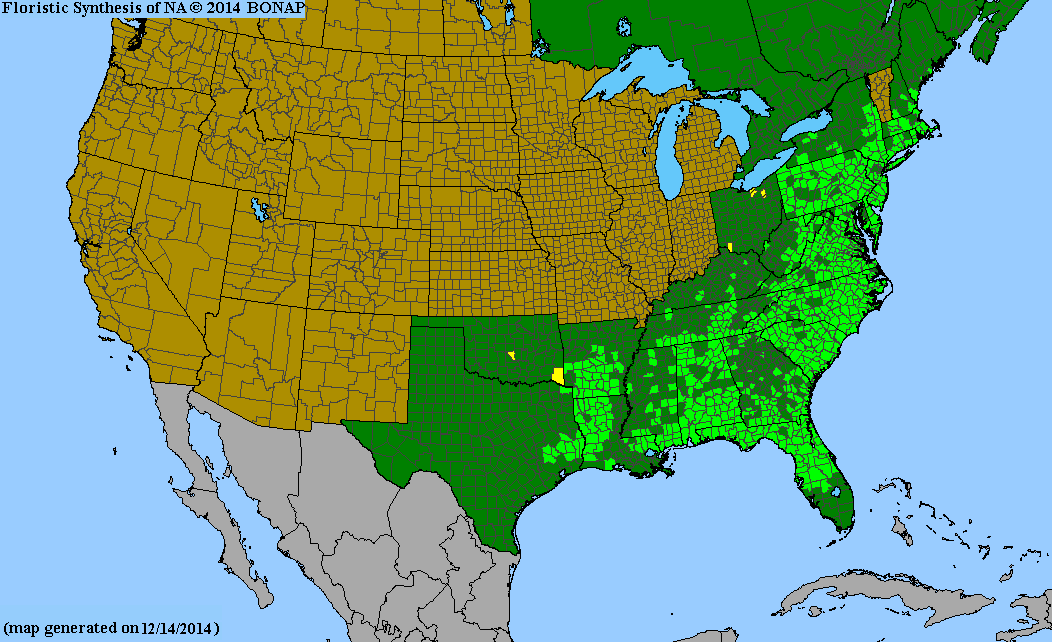
Map Color Key
| Species present in state and native | Species present and not rare | ||
| Species not present in state | Species present and rare |
Kartesz, J.T., The Biota of North America Program (BONAP). 2015. North American Plant Atlas. (http://bonap.net/napa). Chapel Hill, N.C. [maps generated from Kartesz, J.T. 2015. Floristic Synthesis of North America, Version 1.0. Biota of North America Program (BONAP). (in press)].