

| Plant Type | Flowering Perennials |
| Sun Exposure | Full Sun (6+ Hrs), Part Sun / Shade (3-6 Hrs) |
| Height | Medium (3-5') |
| Moisture | Dry, Medium |
| Bloom Months | May, June, July |
| Moisture Needs | Flood Tolerant |
| Season of Interest | Fall (Sep-Nov) |
| Ecological Significance | Native Bee Friendly, Butterfly Friendly |
Description
Sneezeweed is a cheerful and resilient native perennial that fills the late-summer garden with bright golden-yellow blooms. Its daisy-like flowers feature rounded, button-like centers surrounded by neatly notched petals that give them a lively, sunburst appearance. The tall, branching stems create an abundance of blooms that attract pollinators well into autumn. Despite its common name, Sneezeweed does not cause allergies—its pollen is too heavy to be windborne. Instead, it earned the name from its historical use as a dried herb in traditional snuff. Vibrant, long-blooming, and ecologically valuable, Sneezeweed brings energy and color to moist meadows and late-season landscapes.
Ecological Value
Helenium autumnale provides nectar and pollen for bees, butterflies, and wasps, including many native solitary bee species that are active late in the growing season. It is especially attractive to long-tongued bees and butterflies such as Monarchs and Painted Ladies. The sturdy stems and seed heads offer shelter and winter food for birds and insects, while the plant’s deep roots help stabilize soil along streambanks and wet meadows. By flowering late into fall, Sneezeweed plays an important role in sustaining pollinators during the transition to dormancy, bridging the seasonal gap between summer and winter.
Ideal Growing Conditions
Sneezeweed thrives in full sun and moist to wet, well-drained soils, naturally occurring in floodplains, wet prairies, and along stream edges. It prefers rich, loamy soils that stay evenly moist but can tolerate short dry periods once established. The plant grows best in open, sunny locations with consistent moisture, where it can form dense, upright clumps that return reliably year after year. Adaptable and hardy, Sneezeweed flourishes in rain gardens, meadow restorations, and any site that mimics its natural wetland habitat.
Landscape Uses
Ideal for rain gardens, wet meadows, and pollinator plantings, Sneezeweed adds color, structure, and ecological value to late-season landscapes. It pairs beautifully with Blue Vervain, Joe Pye Weed, and Showy Goldenrod for a brilliant fall display alive with pollinators. Its bright yellow blooms provide a perfect complement to the purples, blues, and reds of other autumn wildflowers. Reliable, long-blooming, and rich in wildlife benefits, Sneezeweed is an indispensable native perennial for supporting pollinators and enlivening wet or moisture-retentive gardens late in the season.
Sneeze Weed Native Range
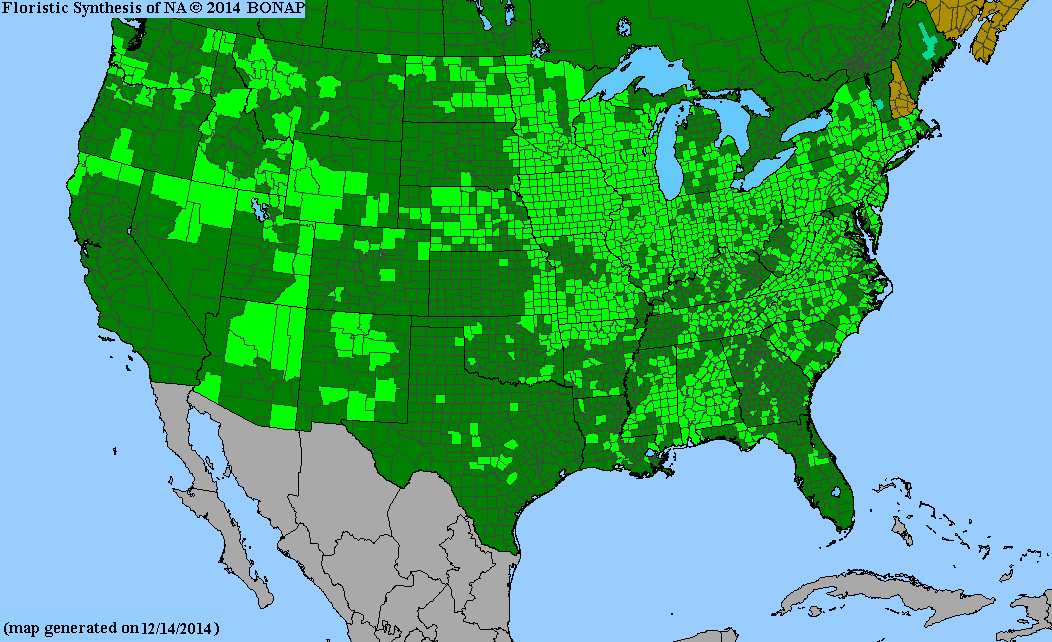
Map Color Key
| Species present in state and native | Species present and not rare | ||
| Species not present in state | Species present and rare |
Kartesz, J.T., The Biota of North America Program (BONAP). 2015. North American Plant Atlas. (http://bonap.net/napa). Chapel Hill, N.C. [maps generated from Kartesz, J.T. 2015. Floristic Synthesis of North America, Version 1.0. Biota of North America Program (BONAP). (in press)].