

| Plant Type | Shrubs |
| Sun Exposure | Full Sun (6+ Hrs), Part Sun / Shade (3-6 Hrs) |
| Moisture | Dry, Medium |
| Bloom Months | May, June, July |
| Moisture Needs | Drought Tolerant |
| Season of Interest | Summer (Jun-Aug) |
| Shrub Height | Under 3', 3' to 6' |
| Shrub Spread | 3' to 6' |
| Ecological Significance | Native Bee Friendly, Butterfly Friendly, Bird Friendly, Hummingbird Friendly, Winter Bird Feed |
Description
Snowberry is a graceful, low-growing native shrub admired for its delicate pinkish-white flowers and distinctive, pearly white berries that brighten the fall and winter landscape. In early to mid-summer, small tubular blossoms cluster along slender, arching stems, attracting pollinators with their subtle fragrance. By late summer, the flowers give way to clusters of round white berries that persist through winter, providing contrast against bare branches and snow. Its soft green foliage and spreading habit make it ideal for naturalized plantings, where it forms thickets that provide structure, texture, and habitat throughout the year.
Ecological Value
Symphoricarpos albus offers nectar and pollen for native bees, bumblebees, and small butterflies, serving as a midseason resource for pollinators. The persistent berries, though mildly toxic to humans, are a valuable winter food source for songbirds such as waxwings, robins, and thrushes, as well as for small mammals. The dense branching provides excellent cover and nesting habitat for birds and overwintering insects. Its fibrous root system stabilizes soil and prevents erosion, making it especially valuable for slopes and streambanks. Snowberry’s resilience and wildlife benefits make it a key species in woodland edges, savannas, and riparian plantings.
Ideal Growing Conditions
Snowberry thrives in full sun to partial shade and dry to moist, well-drained soils, naturally occurring in open woods, thickets, and along streambanks. It prefers loamy or sandy soils but tolerates clay and poor, rocky sites. Once established, it is highly drought-tolerant and cold-hardy, spreading by rhizomes to form dense colonies. It performs best in open or lightly shaded sites where it receives good air circulation and consistent moisture, though it easily adapts to variable conditions.
Landscape Uses
Ideal for slopes, woodland edges, naturalized borders, and erosion control plantings, Snowberry provides subtle beauty and strong ecological value across the seasons. It pairs beautifully with Coralberry, Red Osier Dogwood, and Aromatic Aster for a layered, wildlife-friendly planting. Its soft summer blooms, bright winter berries, and dense habit bring texture and lightness to mixed shrub borders. Hardy, adaptable, and ecologically important, Snowberry is a classic native shrub that supports pollinators, stabilizes soils, and adds four-season visual interest to native landscapes.
Snow Berry Native Range
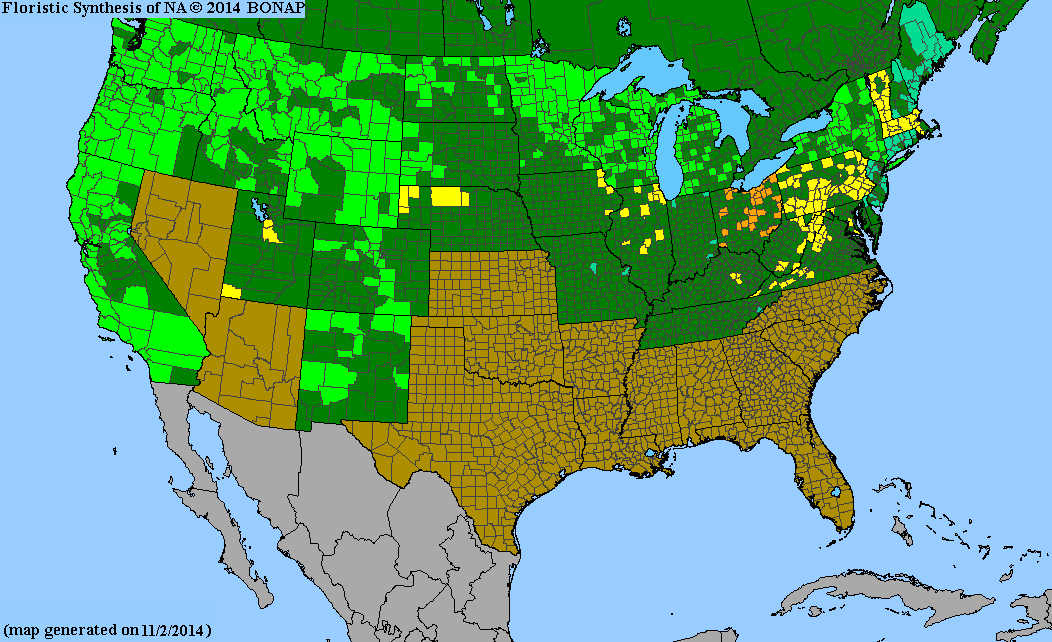
Map Color Key
| Species present in state and native | Species present and not rare | ||
| Species not present in state | Species present and rare |
Kartesz, J.T., The Biota of North America Program (BONAP). 2015. North American Plant Atlas. (http://bonap.net/napa). Chapel Hill, N.C. [maps generated from Kartesz, J.T. 2015. Floristic Synthesis of North America, Version 1.0. Biota of North America Program (BONAP). (in press)].