

| Plant Type | Flowering Perennials |
| Sun Exposure | Full Sun (6+ Hrs) |
| Height | Medium (3-5') |
| Moisture | Medium |
| Bloom Months | June, July |
| Moisture Needs | Drought Tolerant |
| Season of Interest | Spring (Mar-May), Winter (Dec - Feb) |
| Ecological Significance | Native Bee Friendly, Butterfly Friendly, Hummingbird Friendly |
Description
Blue False Indigo is a striking, long-lived native perennial that brings strong structure and early-season color to the garden. Its elegant spires of indigo-blue, pea-like flowers rise above mounds of blue-green foliage in late spring, creating a beautiful contrast in prairie-style plantings or traditional borders. After flowering, it forms inflated seed pods that mature to a dark charcoal color and rattle in the wind, adding a touch of movement and winter interest. Over time, this plant develops a deep taproot, allowing it to thrive for decades with minimal care.
Ecological Value
As a member of the pea family, Baptisia australis enriches the soil by fixing nitrogen and provides important habitat value for pollinators. It is a larval host plant for several butterfly species, including the Wild Indigo Duskywing, Orange Sulphur, Clouded Sulphur, Eastern Tailed Blue, and Hoary Edge. Bees and other native pollinators are drawn to its abundant flowers, while its dense root system helps prevent erosion and supports healthy prairie ecosystems.
Ideal Growing Conditions
Blue False Indigo grows best in full sun and well-drained soils with medium to dry moisture levels. It tolerates a variety of soil types—clay, loam, or sandy—but struggles in poorly drained or consistently wet locations. Once established, it is highly drought-tolerant and rarely needs supplemental watering. Because of its large, woody root system, it should be planted in a permanent location where it has space to expand. Expect young plants to focus on root development in their first few years before producing their full display of blooms. In return, mature plants form a robust, shrub-like presence that offers color, structure, and ecological benefit for many seasons.
Landscape Uses
This plant makes an excellent back-border anchor or focal point in native gardens, meadow plantings, and mixed perennial beds. Its bold form pairs beautifully with ornamental grasses and later-blooming perennials like coneflowers and asters. The decorative seed pods add interest into winter, so consider leaving some stems standing after flowering. With its rugged nature and graceful beauty, Blue False Indigo is an enduring favorite for both gardeners and pollinators.
Wild Blue Indigo Native Range
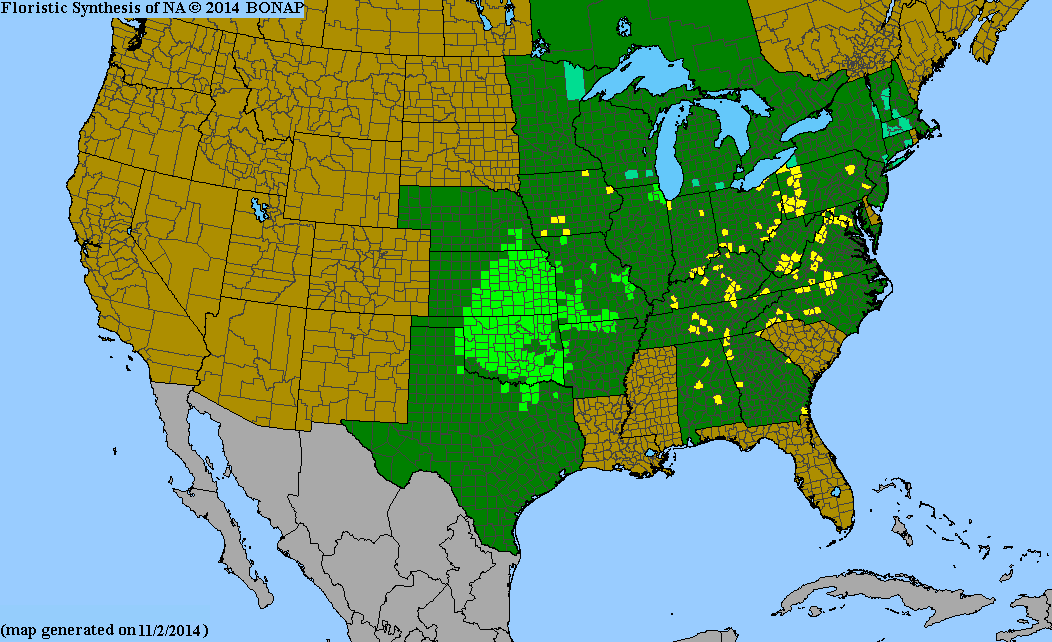
Map Color Key
| Species present in state and native | Species present and not rare | ||
| Species not present in state | Species present and rare |
Kartesz, J.T., The Biota of North America Program (BONAP). 2015. North American Plant Atlas. (http://bonap.net/napa). Chapel Hill, N.C. [maps generated from Kartesz, J.T. 2015. Floristic Synthesis of North America, Version 1.0. Biota of North America Program (BONAP). (in press)].