

| Plant Type | Flowering Perennials |
| Sun Exposure | Part Sun / Shade (3-6 Hrs), Shade (0-3 Hrs) |
| Height | Short (1-3') |
| Moisture | Medium, Wet |
| Bloom Months | April, May, June |
| Moisture Needs | Normal |
| Season of Interest | Spring (Mar-May), Summer (Jun-Aug) |
| Ecological Significance | Native Bee Friendly, Butterfly Friendly, Hummingbird Friendly |
Description
Wild Blue Phlox is a beloved native woodland perennial prized for its clusters of fragrant, star-shaped flowers in soft shades of blue, lavender, or occasionally pink. Blooming in mid to late spring, it forms loose colonies that create a beautiful carpet of color in shaded gardens and woodlands. Its slender stems and semi-evergreen foliage lend a delicate appearance, while its sweet fragrance makes it a favorite among spring bloomers. As the season progresses, Wild Blue Phlox gracefully weaves through companion plants, adding early color and natural charm to shaded landscapes.
Ecological Value
Phlox divaricata provides early-season nectar for butterflies, hummingbirds, and long-tongued bees emerging in spring. It is a host plant for the larvae of several moth species, including the Spotted Straw Moth and Olive Arches Moth. Because it blooms before most other perennials, it plays an important role in sustaining pollinators at a critical time of year. Its dense foliage also offers cover for small insects and ground-dwelling pollinators in woodland environments.
Ideal Growing Conditions
Wild Blue Phlox thrives in partial to full shade and moist, well-drained, humus-rich soils. It naturally occurs in open woodlands and along shaded slopes, where the soil remains consistently cool and evenly moist in spring. While it appreciates regular moisture, it does not tolerate soggy or compacted soil. Once established, it can handle light drought and will spread gently by rhizomes to form attractive drifts. Removing spent blooms can encourage a light second flush of flowers, and cutting back stems after flowering helps maintain a tidy clump through summer.
Landscape Uses
Perfect for woodland gardens, shaded borders, and naturalized plantings, Wild Blue Phlox pairs beautifully with Virginia Bluebells, Wild Geranium, and Ferns for a soft, layered spring display. It also complements shade-tolerant shrubs like Spicebush and Witch Hazel. Its fragrant blooms attract both people and pollinators, while its ability to naturalize gracefully makes it ideal for adding seasonal color beneath trees or along woodland paths. With its delicate beauty and strong ecological value, Wild Blue Phlox is a must-have for any native shade garden.
Wild Blue Phlox Native Range
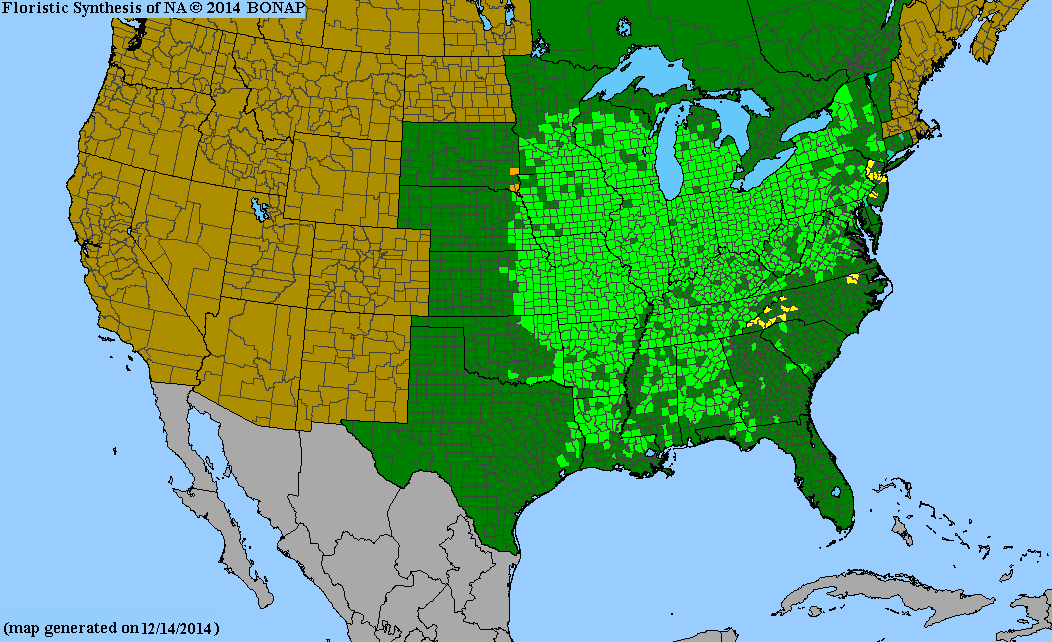
Map Color Key
| Species present in state and native | Species present and not rare | ||
| Species not present in state | Species present and rare |
Kartesz, J.T., The Biota of North America Program (BONAP). 2015. North American Plant Atlas. (http://bonap.net/napa). Chapel Hill, N.C. [maps generated from Kartesz, J.T. 2015. Floristic Synthesis of North America, Version 1.0. Biota of North America Program (BONAP). (in press)].