

| Plant Type | Flowering Perennials |
| Sun Exposure | Part Sun / Shade (3-6 Hrs), Shade (0-3 Hrs) |
| Height | Short (1-3') |
| Moisture | Dry, Medium |
| Bloom Months | May, June, July |
| Moisture Needs | Normal |
| Season of Interest | Spring (Mar-May), Summer (Jun-Aug) |
| Ecological Significance | Keystone, Native Bee Friendly, Butterfly Friendly, Hummingbird Friendly |
Description
Wild Columbine is a graceful and vibrant native perennial that adds early-season color and movement to woodlands and rocky slopes. Its distinctive red and yellow, lantern-like flowers dangle elegantly from slender stems, swaying gently in the breeze. Blooming in mid to late spring, the blooms’ backward-curving spurs are filled with nectar, forming a favorite feeding stop for hummingbirds and long-tongued pollinators. Its soft, ferny blue-green foliage remains attractive after flowering, adding fine texture to shaded or partly sunny gardens. Wild Columbine’s airy form and vivid blooms make it a charming bridge between spring ephemerals and summer wildflowers.
Ecological Value
Aquilegia canadensis is an important nectar source for hummingbirds, butterflies, and long-tongued bees, including bumblebees and miner bees. Its tubular flowers are specifically adapted to hummingbird pollination, providing a key early-season food source when few other red flowers are available. The foliage serves as a host plant for the Columbine Duskywing butterfly. The plant’s open structure provides perching and resting space for small pollinators, and its seeds, produced in small pods, contribute to the diversity of native plant communities in woodlands and rocky outcrops.
Ideal Growing Conditions
Wild Columbine thrives in partial sun to light shade and medium to dry, well-drained soils. It naturally occurs in open woodlands, rocky ledges, and slopes where moisture drains quickly. It prefers soils rich in organic matter but tolerates sandy and gravelly conditions as well. Once established, it is drought-tolerant and self-sows modestly, forming loose colonies that move gently through the garden. Its deep taproot allows it to thrive in thin soils and resist drought, making it a resilient and long-lived addition to native landscapes.
Landscape Uses
Ideal for woodland edges, rocky slopes, and pollinator gardens, Wild Columbine adds early color and ecological value to spring landscapes. It pairs beautifully with Virginia Bluebells, Wild Geranium, and Woodland Phlox for a layered, seasonal display. Its delicate structure and nodding red-and-yellow flowers attract hummingbirds while blending naturally into both shaded and sunny native plantings. Adaptable, low-maintenance, and rich in wildlife benefit, Wild Columbine is a beloved native wildflower that brings color, grace, and pollinator activity to the early growing season.
Featured Resources
Wild Columbine Native Range
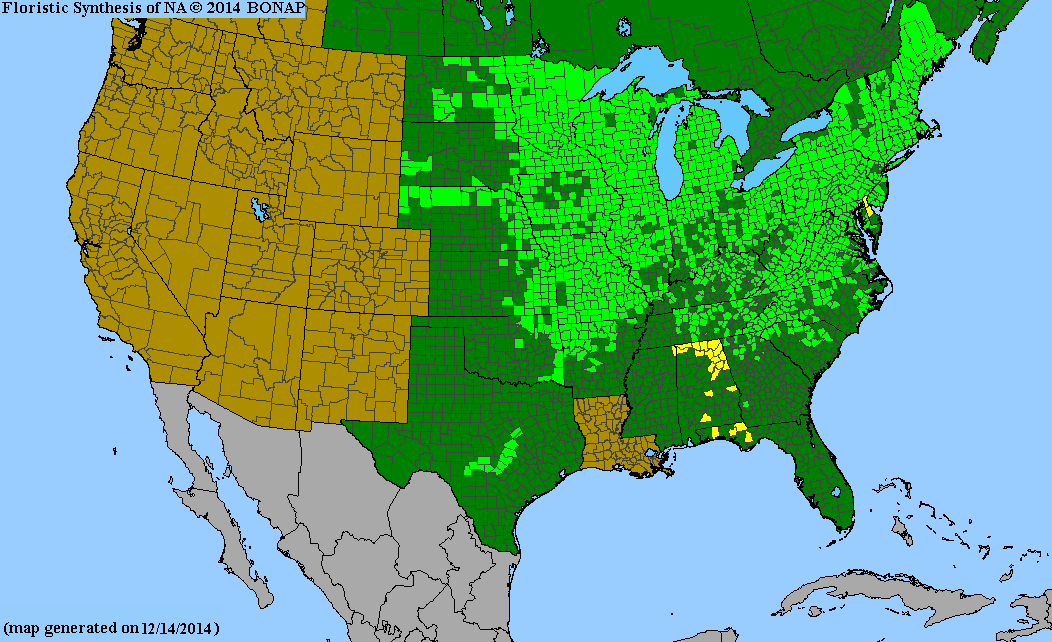
Map Color Key
| Species present in state and native | Species present and not rare | ||
| Species not present in state | Species present and rare |
Kartesz, J.T., The Biota of North America Program (BONAP). 2015. North American Plant Atlas. (http://bonap.net/napa). Chapel Hill, N.C. [maps generated from Kartesz, J.T. 2015. Floristic Synthesis of North America, Version 1.0. Biota of North America Program (BONAP). (in press)].