

| Plant Type | Flowering Perennials |
| Sun Exposure | Full Sun (6+ Hrs), Part Sun / Shade (3-6 Hrs) |
| Height | Ground (<1') |
| Moisture | Dry, Medium |
| Bloom Months | June, July, August |
| Moisture Needs | Normal |
| Season of Interest | Summer (Jun-Aug) |
| Ecological Significance | Native Bee Friendly, Butterfly Friendly, Hummingbird Friendly |
Description
Wild Petunia is a charming, low-growing native perennial that adds soft color and texture to sunny gardens and prairies all summer long. Its trumpet-shaped, lavender to pale purple flowers resemble those of cultivated petunias but belong to a hardy native species well-suited to dry, sunny conditions. Blooming from early to late summer, it forms compact clumps of branching stems covered with fine hairs and narrow green leaves. New flowers open each morning, providing a fresh flush of color throughout the warm season. Graceful yet tough, Wild Petunia is both ornamental and dependable in naturalized landscapes.
Ecological Value
Ruellia humilis provides nectar for native bees, butterflies, and hummingbirds and is a larval host plant for the Common Buckeye butterfly. Its long bloom period makes it an important nectar source during midsummer when many other wildflowers have faded. The plant’s low, spreading habit also provides ground cover for small insects and beneficial pollinators. Highly adaptable and resilient, Wild Petunia contributes to diverse prairie and savanna ecosystems, supporting a variety of pollinator species throughout the season.
Ideal Growing Conditions
Wild Petunia thrives in full sun to light shade and dry to medium, well-drained soils. It is especially well-suited to sandy, rocky, or clay soils where few other flowering plants will thrive. Drought-tolerant once established, it performs best in open, sunny sites but can tolerate partial shade with slightly fewer blooms. It spreads modestly by seed and root, forming small colonies over time without becoming aggressive. Minimal care is needed—simply remove old stems in spring and enjoy its reliable summer-long display.
Landscape Uses
Ideal for rock gardens, sunny borders, and prairie plantings, Wild Petunia pairs beautifully with Butterfly Weed, Coreopsis, and Blazing Stars for a natural summer palette. Its compact form and extended bloom time make it an excellent front-of-border plant or ground-level filler among native grasses. Because of its durability and continuous flowering, it’s also a great choice for low-maintenance pollinator gardens and dry slopes. Delicate in appearance but rugged in nature, Wild Petunia brings subtle beauty and ecological value to any native landscape.
Wild Petunia Native Range
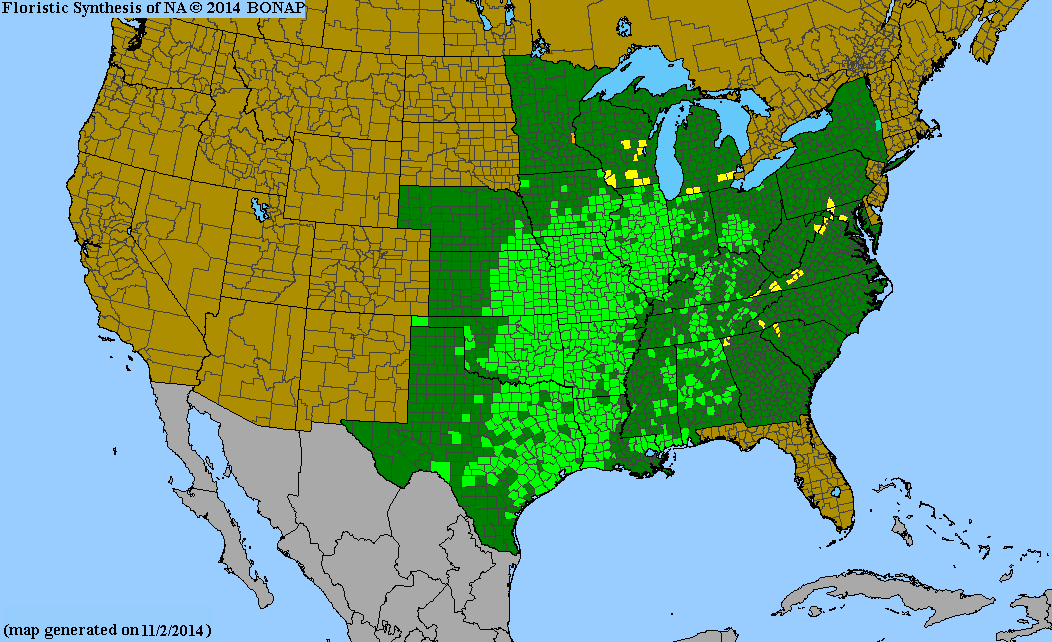
Map Color Key
| Species present in state and native | Species present and not rare | ||
| Species not present in state | Species present and rare |
Kartesz, J.T., The Biota of North America Program (BONAP). 2015. North American Plant Atlas. (http://bonap.net/napa). Chapel Hill, N.C. [maps generated from Kartesz, J.T. 2015. Floristic Synthesis of North America, Version 1.0. Biota of North America Program (BONAP). (in press)].